
2026 Checklist: Essential Home Care Products for Aging Parents in Singapore

What if the greatest risk to your parent's safety isn't a sudden illness, but a simple, preventable slip in the hallway? Caring for an aging loved one at home is a deeply rewarding journey, but it often comes with a constant, quiet anxiety about falls or the physical strain of daily assistance. You want to provide the best possible environment, yet the sheer variety of hospital beds and specialized dementia care products Singapore families need can feel overwhelming.
This 2026 checklist provides a structured, professional roadmap to selecting the right equipment to secure their independence and your peace of mind. We'll explore essential mobility aids and bathroom safety upgrades designed for the unique layout of local homes. From preventing hospital readmissions to reducing your own physical load, these steps ensure your home remains a sanctuary of safety and dignity for your parents.
Table of Contents
The Mobility and Independence Checklist: Navigating Daily Movement
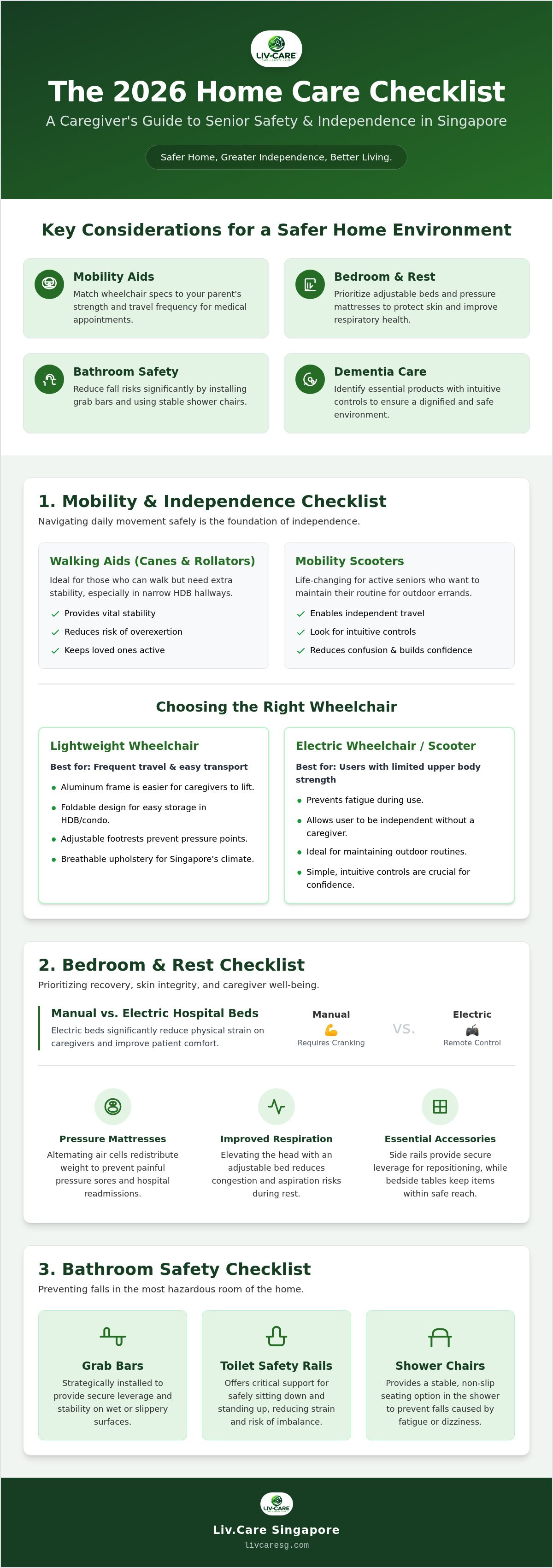
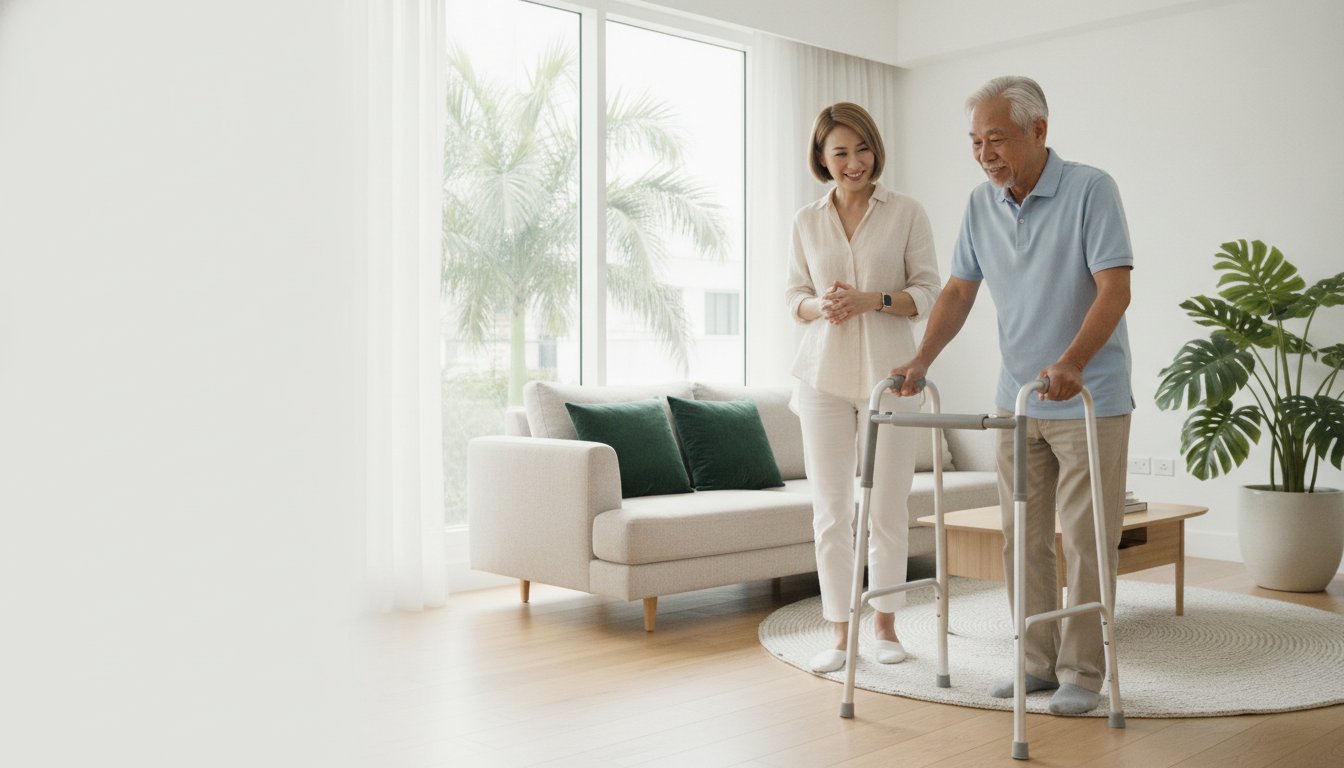
Maintaining movement is the foundation of independence for seniors. When you begin your assessment, start by evaluating your parent's upper body strength and stamina. This determines whether a manual wheelchair is viable or if an electric model is required to prevent fatigue. For parents who still have the balance to walk but need extra support in narrow HDB hallways, walking aids like quad canes or rollators provide vital stability. These tools are part of a wider Assistive Technology Overview, offering the physical reinforcement needed to keep your loved one active and safe.
Active parents who wish to maintain their routine for outdoor errands often find mobility scooters life-changing. These devices allow them to visit the neighborhood market or community center without the risk of overexertion. When selecting dementia care products Singapore caregivers should look for equipment with intuitive controls. Simple interfaces reduce confusion and ensure the user feels confident while navigating public spaces or common corridors.
Selecting the Right Walking Aids and Wheelchairs
Living space is a primary concern in Singapore. You'll need to decide if a foldable design is necessary for easy storage within a condo or HDB flat. It's also helpful to understand the functional differences between standard models and lightweight wheelchairs, which are significantly easier for caregivers to lift into car boots or taxis. While exploring dementia care products Singapore families should prioritize long-term comfort by checking for these specific features:
Adjustable footrests: These ensure proper leg alignment and prevent pressure points.
Breathable upholstery: This is essential for managing skin health in Singapore's humid climate.
Lightweight frames: Look for aluminum builds that simplify frequent travel and transport.
Visiting a physical showroom allows you to test these features hands-on. It ensures the equipment fits your parent's specific proportions and your own physical capabilities as a caregiver. Taking this step helps build a sense of security and long-term reliability in your care plan.
Bedroom and Rest Checklist: Prioritizing Recovery and Skin Integrity
The bedroom serves as the primary space for rest and recovery. For parents with limited mobility, adjustable hospital beds are essential tools that facilitate safer transfers and improve respiratory health. By elevating the head, these beds reduce the risk of congestion and aspiration. As noted in Tech for Alzheimer's Care, purposeful technology helps families manage complex needs. When researching dementia care products Singapore families should prioritize beds that allow for precise positioning to prevent nighttime agitation or wandering.
Skin integrity is another vital factor for seniors who spend more than 12 hours a day in bed. Without the right support, pressure sores can develop, leading to painful complications and hospital readmissions. Our home nursing equipment guide provides a deep dive into managing bed-bound care effectively. Adding side rails provides secure leverage for repositioning, while bedside tables ensure medication and water remain within easy reach, reducing the need for risky stretches.
Choosing Between Manual and Electric Hospital Beds
Electric hospital beds offer significant advantages for the caregiver's physical well-being. They eliminate the need for manual cranking, allowing you to adjust the height and backrest with a simple remote. This is particularly helpful when assisting with hygiene or meals. If your parent faces a high risk of skin breakdown, it's wise to select a pressure mattress with alternating air cells to redistribute weight automatically. Always verify the bed's weight capacity and total dimensions to ensure it fits comfortably within a standard HDB or condo bedroom. To see these features in person, you can browse our curated selection of beds online or visit our showroom for a hands-on trial.
Bathroom Safety and Home Modification Checklist: Preventing Falls
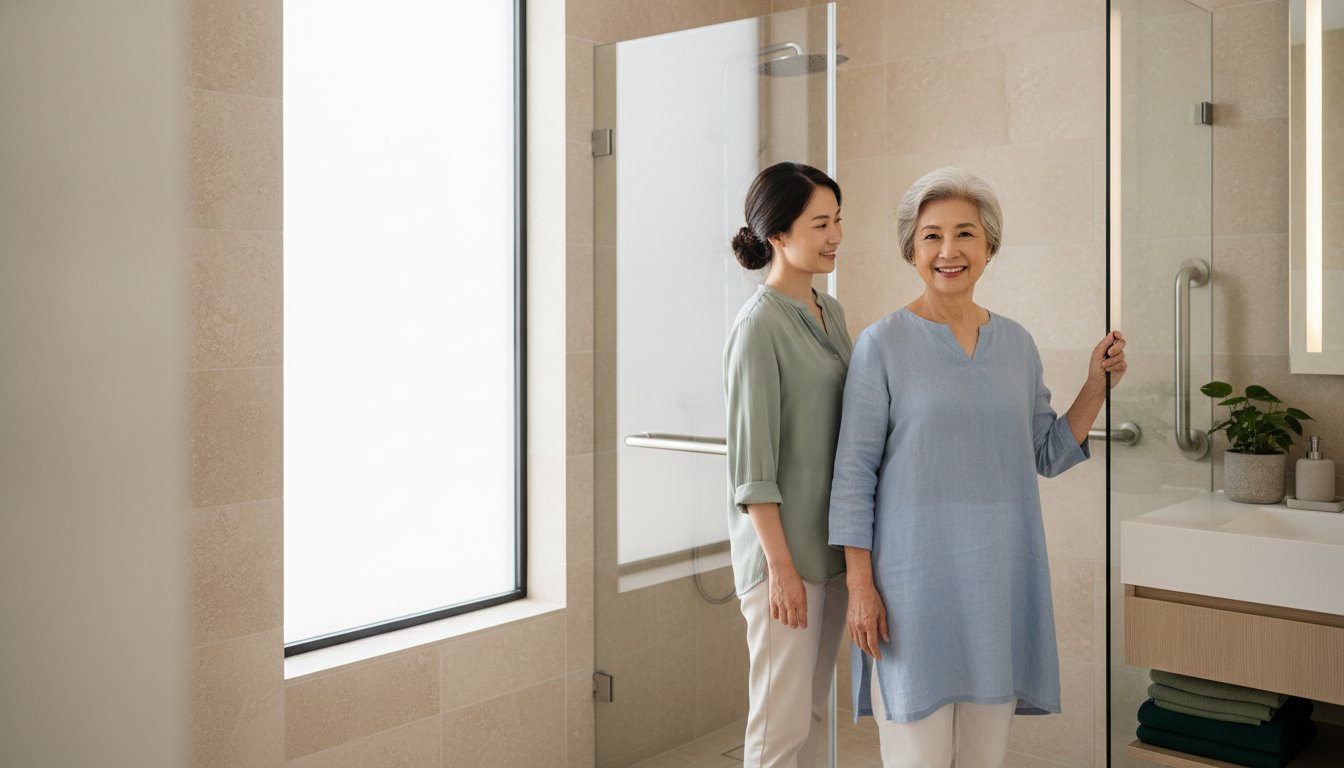
The bathroom is often the most hazardous room in a Singaporean home because of wet surfaces and tight layouts. Installing grab bars and toilet safety rails provides the secure leverage your parents need to move through these spaces with confidence. While academic studies on AI in Dementia Care suggest future monitoring tech, physical safety modifications remain the first line of defense. When browsing dementia care products Singapore caregivers should prioritize mechanical aids like shower chairs or commode chairs to reduce the risk of slips during daily hygiene routines.
Essential Bathroom Safety Equipment and Assessment
Choosing between fixed grab bars and portable toilet frames depends on your parent's specific stability level. Fixed bars offer maximum weight support, while portable frames provide flexibility without the need for drilling into tiles. In our humid climate, ensure all equipment features corrosion-resistant materials and non-slip rubber tips for lasting safety. Beyond the bathroom, removing loose rugs and improving lighting are key parts of a comprehensive home safety strategy.
For more complex transitions, incorporating transfer belts allows you to safely assist your parent from a wheelchair to a chair without risking a back injury. When evaluating dementia care products Singapore families should choose items that simplify these high-risk moments. To identify hidden hazards you might've missed, it's often best to schedule a professional home care assessment. This expert review ensures your living space is fully optimized for safety, providing long-term security for the whole family.
Securing a Safe and Dignified Home Environment
Building a supportive living space for your parents is a journey of thoughtful, proactive steps. By prioritizing the hierarchy of safety, mobility, and comfort, you create an environment that fosters independence and reduces caregiver strain. Each decision, from choosing an adjustable hospital bed to installing secure bathroom grab bars, plays a vital role in preventing injuries. Identifying the right dementia care products Singapore families need ensures that your home remains a sanctuary of dignity and well-being.
Visit our medical equipment showroom for a hands-on trial to guarantee the best fit for your loved ones. You can also join our Care Membership for ongoing support and exclusive coordination as your family's needs change. Explore our full range of home care products for aging parents and secure your parent's comfort today. We're dedicated to supporting you through every stage of the caregiving journey.
Frequently Asked Questions
What are the most essential home care products for aging parents starting home care?
Essential items include mobility aids like wheelchairs, hospital beds with pressure mattresses, and bathroom safety equipment such as grab bars. These products form the foundation of a safe home environment. When researching dementia care products Singapore caregivers often prioritize these mechanical aids to prevent injuries and ensure their parents can rest comfortably while maintaining a degree of independence in daily routines.
How do I choose between a manual and an electric hospital bed for home use?
Your choice depends on the caregiver's physical strength and the parent's level of mobility. Electric hospital beds allow you to adjust the backrest and height with a remote, reducing the risk of back strain for the caregiver. Manual beds require physical cranking, which can be difficult for frequent adjustments. Electric models also empower parents to find their own comfortable positions independently and safely.
Are there specific home care products recommended for parents with high fall risks?
High fall risks require a combination of stability aids and environmental changes. Walking aids like quad canes provide essential balance, while shower chairs and toilet safety rails secure the bathroom. We also recommend a professional home care assessment to identify hidden hazards. These steps, combined with removing loose rugs and improving lighting, significantly lower the likelihood of dangerous slips or trips within the home.
Why should I visit a medical equipment showroom before purchasing home care products?
Visiting a showroom allows you to test the equipment's fit and functionality before buying. You can verify if a wheelchair is lightweight enough for your car boot or if a hospital bed's dimensions suit your HDB room. This hands-on trial builds confidence in the product's reliability and ensures it meets your parent's specific comfort requirements. It's the best way to ensure long-term satisfaction.
Comments