
Post-Surgery Recovery Equipment Singapore: The Ultimate Home Care Checklist (2026)

What if the most critical phase of your surgical journey isn't the operation itself, but the first forty-eight hours after you step through your front door? For many Singaporean families, the joy of hospital discharge is quickly replaced by the fear of a preventable fall or the confusion of setting up a complex medical environment at home. It's difficult to know which post-surgery recovery equipment Singapore experts recommend when you're balancing clinical needs with the realities of a typical home layout. We understand that you want to provide the best care possible without feeling like a stranger in your own house. This guide offers a comprehensive checklist to help you build a safe, hospital-grade recovery space. You'll learn exactly which mobility aids, specialized beds, and bathroom safety tools are essential for a smooth, fall-free transition to independence.
Table of Contents
The Core Checklist: Essential Home Furniture for Clinical Rest
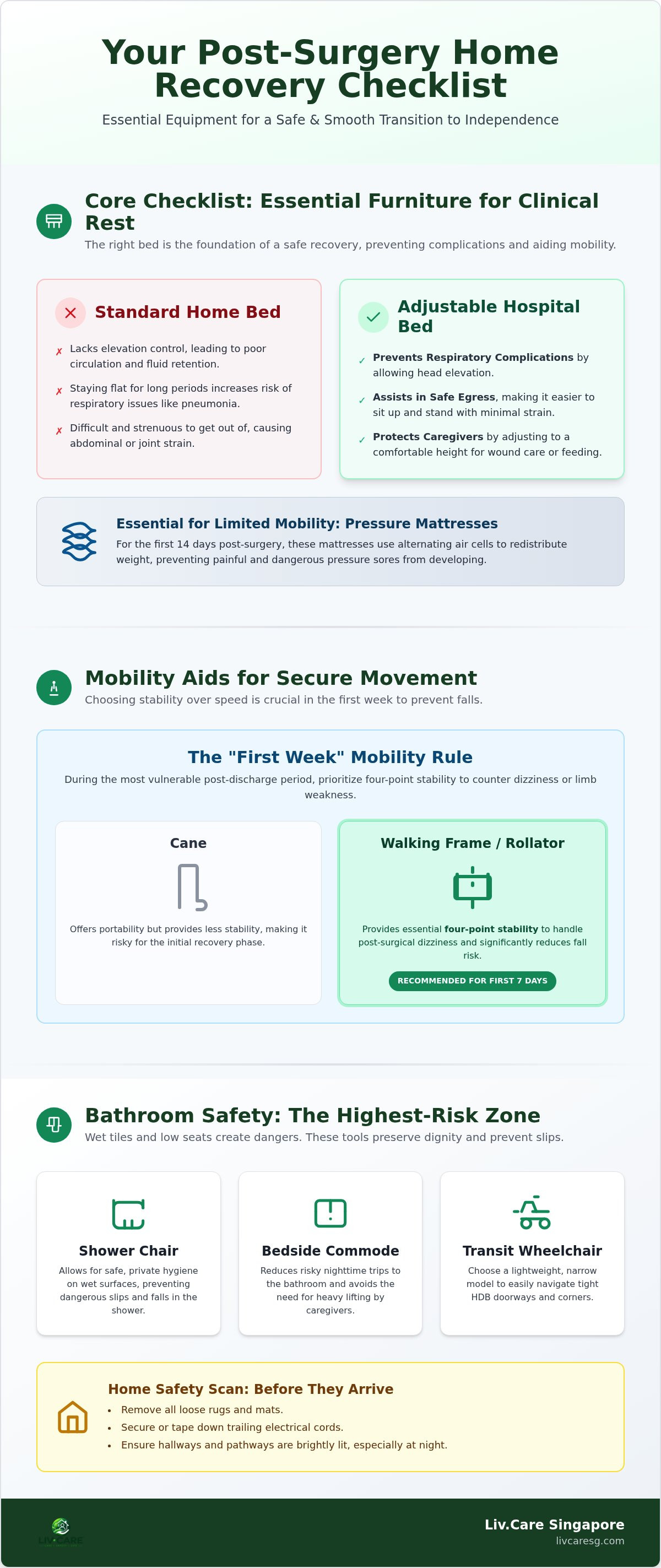
Transitioning from a hospital ward to a home environment requires more than just a comfortable mattress. Standard home beds often fail post-surgery patients because they lack elevation control. Without the ability to raise the head or knees, patients struggle with circulation and fluid retention. Investing in the right post-surgery recovery equipment Singapore families can rely on starts with clinical-grade furniture that mirrors the support of a hospital ward.
Adjustable hospital beds play a vital role in preventing respiratory complications like pneumonia, which can occur when a patient remains flat for extended periods. These beds also assist in safe egress, allowing the user to sit up and swing their legs over the side with minimal abdominal or joint strain. When understanding medical devices for home use, it's clear that articulation is a safety feature that protects both the patient and the caregiver.
To better understand how specific equipment supports your journey home, watch this helpful video:
For patients with limited mobility during the first 14 days, pressure mattresses are essential. These surfaces use alternating air cells to redistribute weight, preventing painful pressure sores that can develop in just a few hours. This protection is especially important during the initial weeks when the patient is most sedentary and vulnerable to skin breakdown.
Choosing Between Semi-Electric and Fully Electric Home Care Beds
Semi-electric models allow users to adjust the head and foot sections electronically, but the overall bed height is manual. Fully electric beds offer motorized height control, which is a significant advantage for caregivers. It prevents back strain by bringing the bed to a comfortable working height for wound dressing or feeding. In Singaporean bedrooms, space is often limited. Always measure your room to ensure there is at least 60cm of side-rail clearance for safe transfers. A hospital bed at home is not just for sleep; it is a tool for safe patient handling and easier wound care.
Mobility Aids and Bathroom Safety for Secure Movement
Moving around the home safely is the next hurdle after securing a clinical-grade bed. Selecting the right post-surgery recovery equipment Singapore residents need often involves a shift in perspective regarding mobility. During the first seven days post-discharge, we recommend the "First Week" rule: prioritize a walking frame or rollator over a cane. While a cane offers portability, a frame provides the four-point stability required to handle post-surgical dizziness or limb weakness. These devices are classified as essential durable medical equipment because they significantly reduce the risk of "near-miss" stumbles.
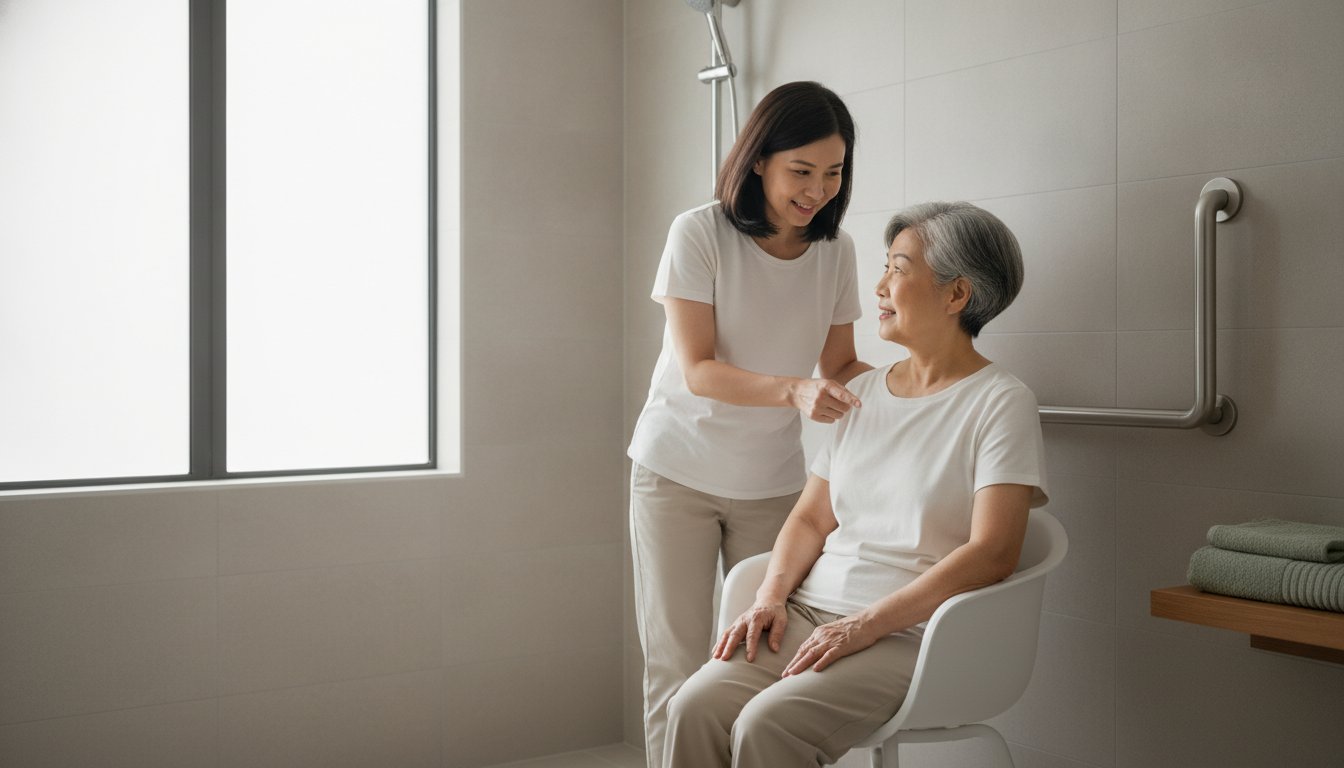
The bathroom remains the highest-risk fall zone in any home. Wet tiles and low toilet seats create a dangerous environment for anyone with restricted hip or knee movement. Using a shower chair or a bedside commode preserves patient dignity by allowing for private hygiene without requiring a caregiver to perform heavy lifting. Before your loved one arrives home, identify other high-risk zones. Remove loose rugs, secure trailing electrical cords, and ensure that all transitional hallways are brightly lit to prevent tripping in the dark.
Selecting the Right Wheelchair for Post-Op Transit
For many families, HDB doorway widths are a primary constraint when choosing transit tools. Lightweight wheelchairs are often superior to standard models because they feature a narrower profile that navigates tight corners and bathroom entrances more easily. If the patient is recovering from orthopedic surgery, look for models with elevating leg rests to help manage limb swelling during transport. You can find more detailed technical advice in our Choosing a Wheelchair in Singapore Guide. Finding the right fit ensures the home remains a place of healing rather than a series of obstacles. You can browse our curated range of mobility aids and safety tools to see which options suit your specific floor plan.
Professional Planning: Home Assessments and Long-Term Support
Successful recovery isn't just about owning the right tools; it's about how those tools integrate into your specific living space. A home care assessment Singapore specialist can identify environmental obstacles you might miss, such as a doorway that's too narrow for a specific bed frame or a floor surface that hinders a walker. This tailored planning aligns with the World Health Organization on Rehabilitation, which highlights that environmental adjustments are crucial for restoring a patient's independence. If you're uncertain about the tactile comfort of a mattress or the noise level of a motor, visiting a medical equipment showroom Singapore families trust allows for hands-on testing. This experience acts as a vital stress-reduction tool for caregivers who need to feel confident in their choices before the patient is discharged.
Ongoing support is just as important as the initial setup. A Care Membership provides long-term peace of mind through scheduled equipment maintenance and reliable technical assistance. It ensures that your post-surgery recovery equipment Singapore setup remains safe and functional throughout the entire healing journey. This professional oversight prevents the common frustration of equipment downtime during a critical recovery window.
Integrating Care Coordination into the Recovery Plan
The journey doesn't end when the first week is over. Transitioning from acute rest to long-term independence requires equipment that adapts to your improving mobility. By utilizing a care membership Singapore, caregivers can access priority service and expert guidance as the patient's needs change. Professional setup for hospital beds is essential to prevent technical failure and ensure that all electronic safety sensors are calibrated correctly for home use. This structured approach lets you focus on what matters most: helping your loved one regain their strength in a secure environment.
Preparing for a Confident Recovery at Home
Setting up a clinical-grade environment at home ensures your loved one’s comfort and safety. By prioritizing adjustable beds and stable mobility aids, you build a foundation for a fall-free transition. Professional guidance makes this process much simpler. We provide personalized home care assessments to ensure your post-surgery recovery equipment Singapore setup fits your floor plan perfectly. You can also visit our Singapore-based showroom for hands-on testing to feel the quality of our aids firsthand. Our comprehensive Care Membership offers ongoing assistance, so you don't have to manage maintenance alone. You've got this. With the right tools and a dedicated partner, the path to independence is well within reach.
View our curated range of post-surgery recovery products to begin your home preparation.
Frequently Asked Questions
What is the most important piece of equipment for post-surgery recovery at home?
An adjustable hospital bed is typically the most critical investment for clinical rest. It allows for precise elevation control to reduce swelling and improve breathing. When combined with a pressure mattress, it creates a safe environment that prevents bedsores. This setup provides the necessary support for patients who can't yet transition to standard home furniture safely.
Can I rent post-surgery recovery equipment in Singapore instead of buying?
Renting is a common option in Singapore for short-term recovery periods under three months. Many local suppliers provide monthly rates for items like hospital beds or wheelchairs. This approach is cost-effective if you don't anticipate a long-term need. We prioritize the sustainability of care through high-quality retail options and ongoing support for families managing permanent home health transitions.
How do I know if a hospital bed will fit in my HDB bedroom?
Measuring your floor plan is the only way to be certain. A standard hospital bed usually needs a space of 220cm by 100cm, with extra room for side-rail clearance. A professional home care assessment is highly recommended for HDB residents. Our team evaluates your specific layout to ensure your post-surgery recovery equipment Singapore setup doesn't block essential pathways.
What equipment is needed specifically for vitrectomy (eye surgery) recovery?
Vitrectomy recovery focuses on maintaining a face-down position. You'll need specialized face-down pillows or prone-rest chairs to keep your head in the correct alignment. While these are surgery-specific, general aids like bedside commodes or walking frames are also helpful. These tools ensure you don't strain your eyes or body while navigating your home during the initial healing phase.

Comments