
2026 Guide: Senior Living Aids for Aging in Place, Singapore

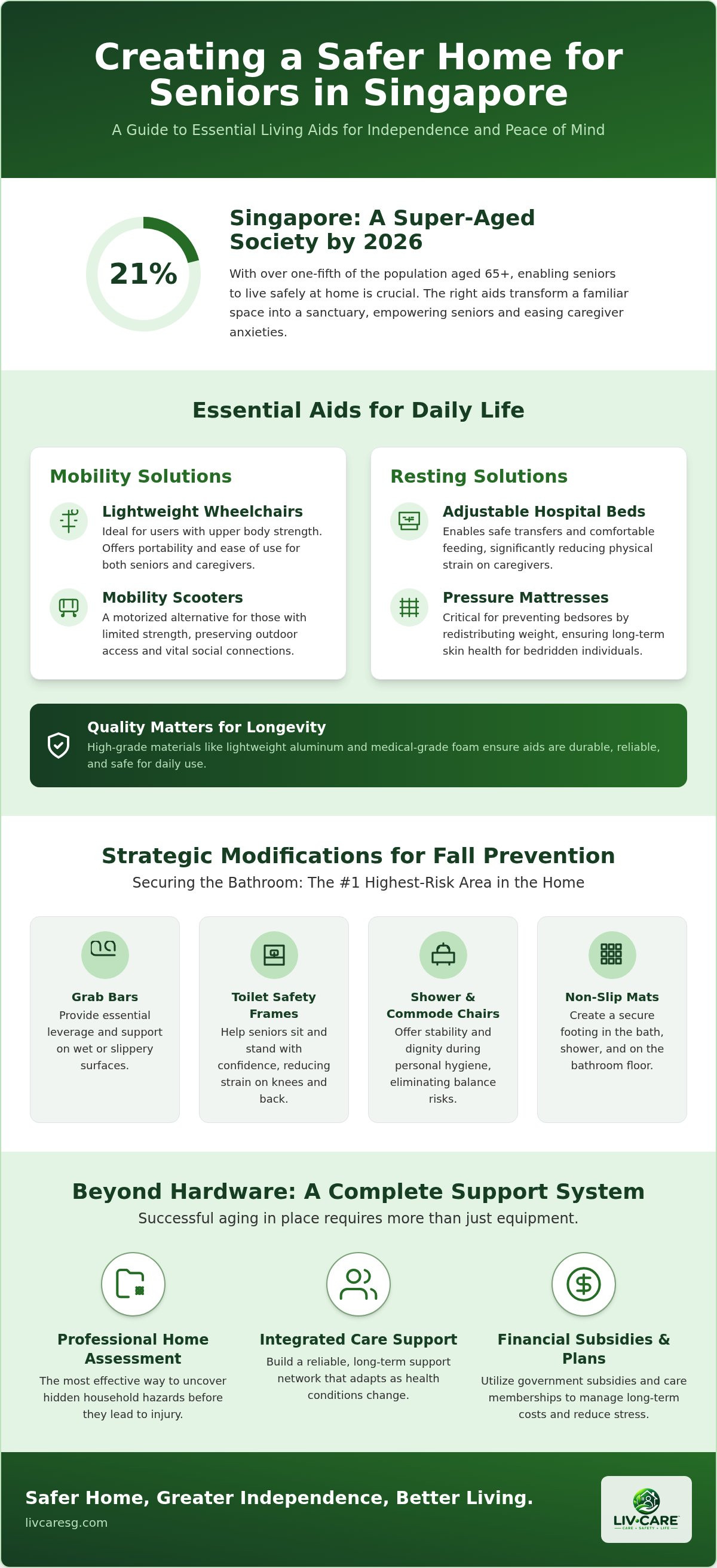
In 2026, over 21% of Singapore's population is aged 65 and above, marking our official transition into a super-aged society. Most families want their parents to stay in the comfort of their own homes, yet the daily reality of caregiving often brings hidden anxieties. You might worry about a slip in the bathroom or feel the physical strain of helping a loved one move from bed to chair. It's common to feel overwhelmed by technical terms like hospital grade when all you want is a solution that works.
This guide will show you how the right selection of essential senior living aids for home can transform your living space into a sanctuary of safety and independence. We'll explore the most effective mobility and safety tools while explaining how local subsidies and professional assessments can simplify your caregiving journey.
Table of Contents
The Core Categories of Senior Living Aids for Home Independence
Creating a senior-friendly environment in Singapore requires looking beyond individual gadgets. It involves building a cohesive system where each piece of equipment supports the next. When we talk about essential senior living aids for home, we refer to a spectrum ranging from walking frames to electric wheelchairs. These tools aren't just "basic equipment"; they are part of a comprehensive overview of assistive technology designed to bridge the gap between physical limitation and daily independence.
Quality matters for longevity. High-grade materials like lightweight aluminum ensure that mobility aids are easy to maneuver without sacrificing strength. Similarly, medical-grade foam in resting solutions provides the necessary support for aging joints. These material choices define high-quality essential senior living aids for home, directly impacting how long a senior can remain safe. Durable materials reduce the frequency of replacements and ensure equipment remains reliable during daily use.
Mobility and Resting Solutions for Daily Living
Selecting the right mobility tool depends heavily on the user's physical condition and environment. For those with sufficient upper body strength, lightweight wheelchairs offer portability and ease of use for both the senior and the caregiver. If strength is limited, mobility scooters provide a motorized alternative that preserves outdoor access and vital social connection.
Resting solutions are equally vital for home care. Adjustable hospital beds allow caregivers to manage safe transfers and feeding with significantly less physical strain. To protect seniors with limited mobility, combining these beds with pressure mattresses is a critical step. These mattresses redistribute weight effectively, which is essential for preventing bedsores and ensuring long-term skin health for bedridden individuals.
Strategic Home Modifications for Fall Prevention and Bathroom Safety
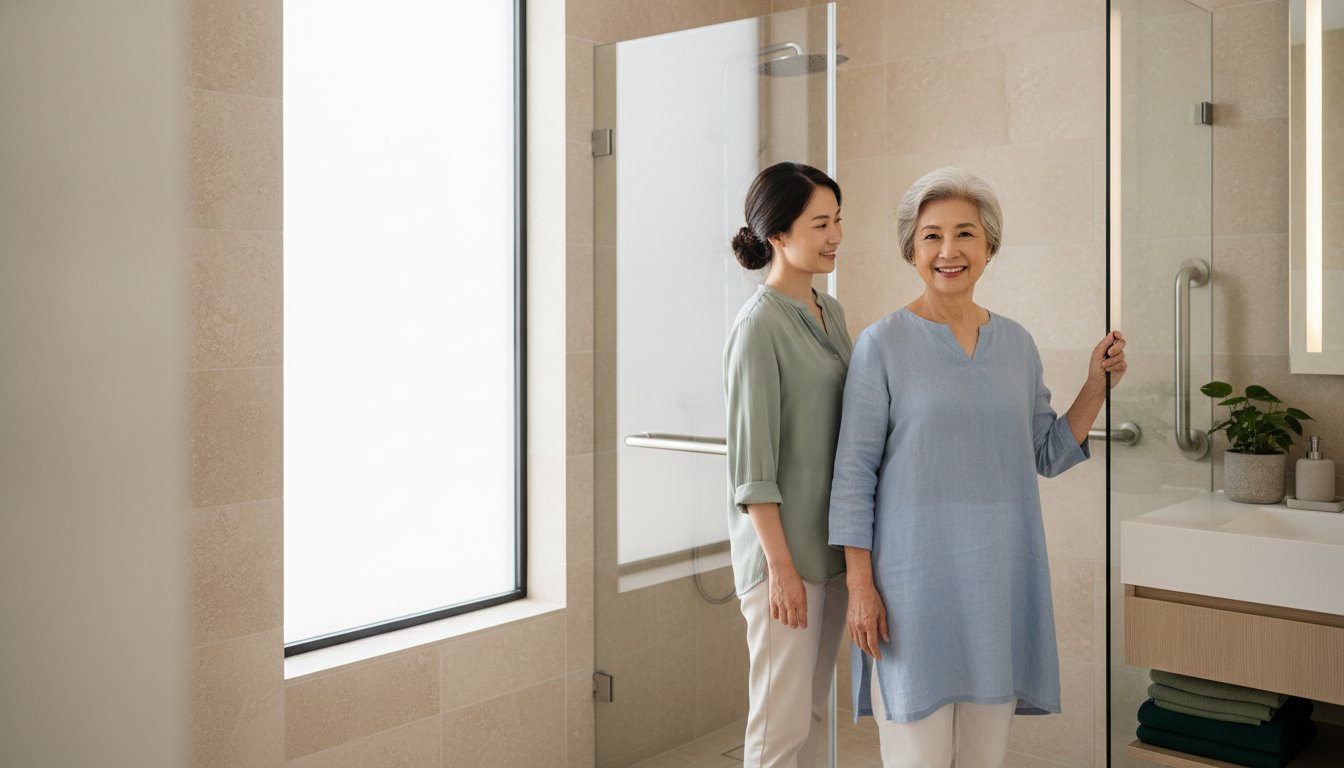
The bathroom remains the highest-risk area for falls in any home due to slippery surfaces and tight spaces. Effective fall prevention is a proactive strategy involving both specialized equipment and environmental changes to reduce hazards before accidents occur. For Singaporean families, prioritizing bathroom safety equipment Singapore residents can rely on is the first step toward a secure aging-in-place environment.
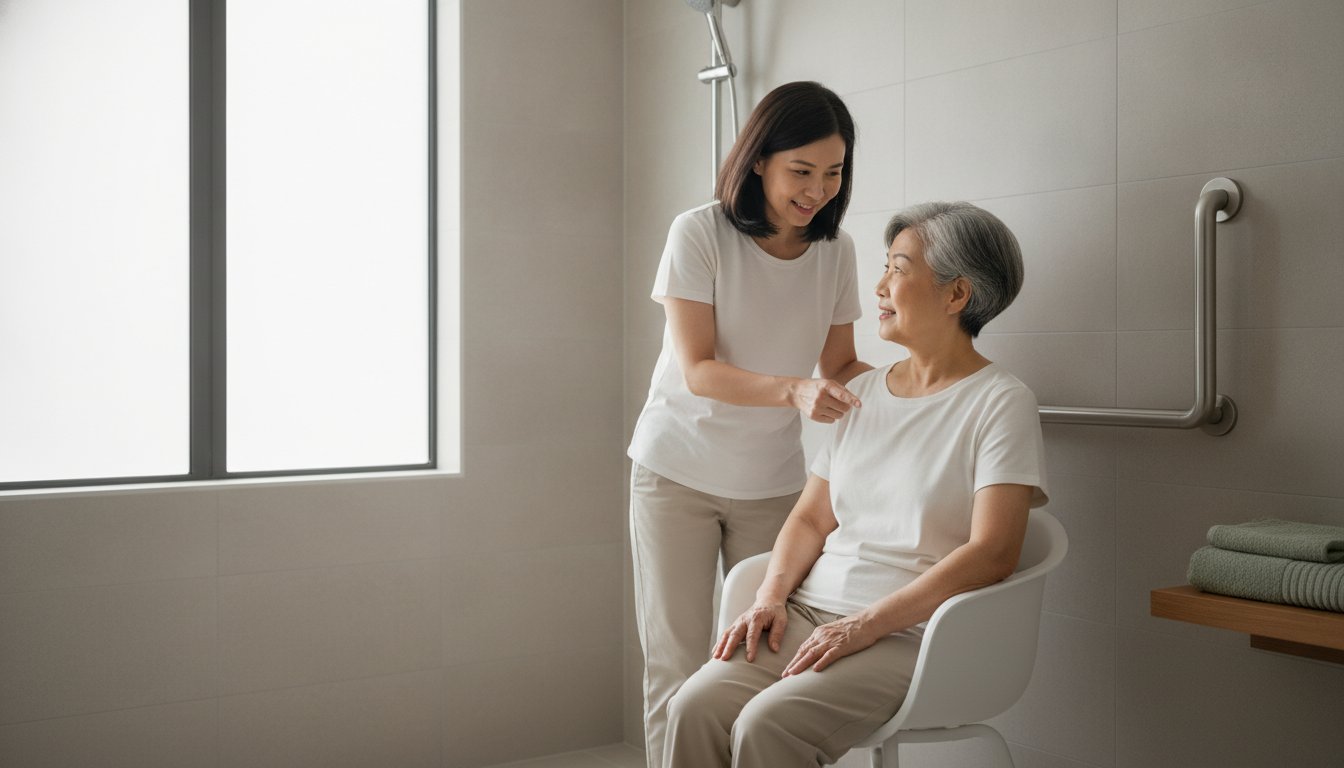
Grab bars and toilet rails provide the essential leverage seniors need to use facilities without assistance. These tools are non-negotiable for maintaining safety on wet surfaces where balance is easily compromised. Similarly, shower and commode chairs offer stability and dignity during personal hygiene routines. These essential senior living aids for home ensure that seniors don't have to balance on slippery floors, which significantly lowers the risk of injury. You can find a Fall-Proofing Your Home guide from the NIA to help identify other risks throughout your house.
Securing High-Risk Zones with Targeted Equipment
Independence in the bathroom often hinges on the right support structures. Using toilet safety frames allows seniors to sit and stand with confidence, reducing the strain on their knees and back. These frames, combined with non-slip mats and properly placed grab bars, create a safety net that protects against sudden slips. They turn a potentially dangerous room into a manageable space.
Integrating walking aids for elderly Singapore into the home layout ensures continuous support as they move between rooms. It's about creating a seamless path where essential senior living aids for home work together. If you're unsure where to start, our team can help you choose the right bathroom safety tools to fit your home's unique layout.
Beyond the Hardware: Integrating Care Support and Memberships
Purchasing equipment provides the physical foundation for safety, but successful aging in place requires more than just hardware. Integrating the caregiver essentials Singapore families need involves building a reliable, long-term support network. While essential senior living aids for home solve immediate mobility or safety concerns, a proactive strategy ensures these solutions remain effective as health conditions change. The World Health Organization on assistive technology highlights that these tools are vital for well-being, yet their impact is maximized when they're part of a coordinated care plan.
Transitioning from reactive, emergency purchases to a proactive care coordination strategy helps families avoid the chaos of sudden health crises. A care membership Singapore residents can utilize creates a sustainable model for the future. It provides financial predictability through discounts and ensures priority access to expert advice. This model guarantees your essential senior living aids for home stay in peak condition through regular checks, which is vital for preventing accidents caused by worn-out equipment.
The Benefit of Professional Care Coordination
Caregiving is a demanding journey that shouldn't be managed alone. Coordination saves valuable time. Using care coordination services allows families to share the responsibility of safety management, significantly reducing caregiver stress. Professional coordination bridges the gap between clinical needs and daily living. It ensures that every piece of equipment, from wheelchairs to beds, is used correctly and maintained to the highest standards.
The most effective way to begin this journey is through a comprehensive home care assessment. This professional evaluation uncovers hidden environmental hazards that generic product lists often overlook. It allows for a tailored selection of aids based on the specific layout of your home and the unique physical requirements of your loved one. By addressing these risks early, you create a safer, more dignified environment that evolves alongside the senior's needs.
Building a Safer Future at Home
Choosing the right tools is about more than just utility; it's about preserving the dignity and comfort of those you love. By integrating mobility solutions with strategic bathroom modifications, you create a home that adapts to changing needs. Remember that essential senior living aids for home work best when paired with professional insights and regular maintenance. A professional home care assessment is the perfect starting point to identify specific risks and tailor solutions to your unique space.
You don't have to manage this journey alone. Visit our showroom for a personalized consultation or join our Care Membership for exclusive discounts and ongoing support. Explore our curated range of senior living aids and mobility solutions to start your home transformation today. With the right support, aging in place becomes a journey of confidence and security for the whole family.
Frequently Asked Questions
What are the most essential senior living aids for a small home?
The most essential senior living aids for home in compact spaces include high-impact safety tools like bathroom grab bars and foldable walking aids. These items provide maximum protection without cluttering narrow hallways or small rooms. A professional home care assessment is particularly useful for small homes. It identifies exactly which space-saving modifications will provide the greatest benefit for your loved one's specific mobility needs.
Can I get subsidies for senior living aids in Singapore?
Yes, several government schemes help offset the cost of equipment in Singapore. The Seniors' Mobility and Enabling Fund (SMF) offers up to 90% subsidies for assistive devices like wheelchairs and hospital beds for eligible citizens. Additionally, the EASE program provides significant subsidies for home modifications such as grab bars and slip-resistant flooring, making essential senior living aids for home much more accessible for local families.
How do I know if my parent needs a wheelchair or a walking frame?
This decision depends on your parent's current stability and physical endurance. Walking frames are best for those who can bear weight but require balance support. If they tire easily or have a high risk of falling over longer distances, a wheelchair or mobility scooter is a safer choice. Testing both options at our physical showroom helps ensure you select the equipment that best supports their independence and safety.
Is it better to buy or rent hospital beds for home use?
Buying is usually the better investment for families committed to long-term aging in place. While renting might seem cheaper initially, the cumulative costs of long-term rental often exceed the purchase price of a new hospital bed. Owning the equipment also ensures you have a permanent, reliable setup. Joining a Care Membership can help manage these costs by providing exclusive discounts on high-quality home care furniture and maintenance.

Comments