
Bathroom Safety Equipment in Singapore: The 2026 Caregiver’s Selection Guide

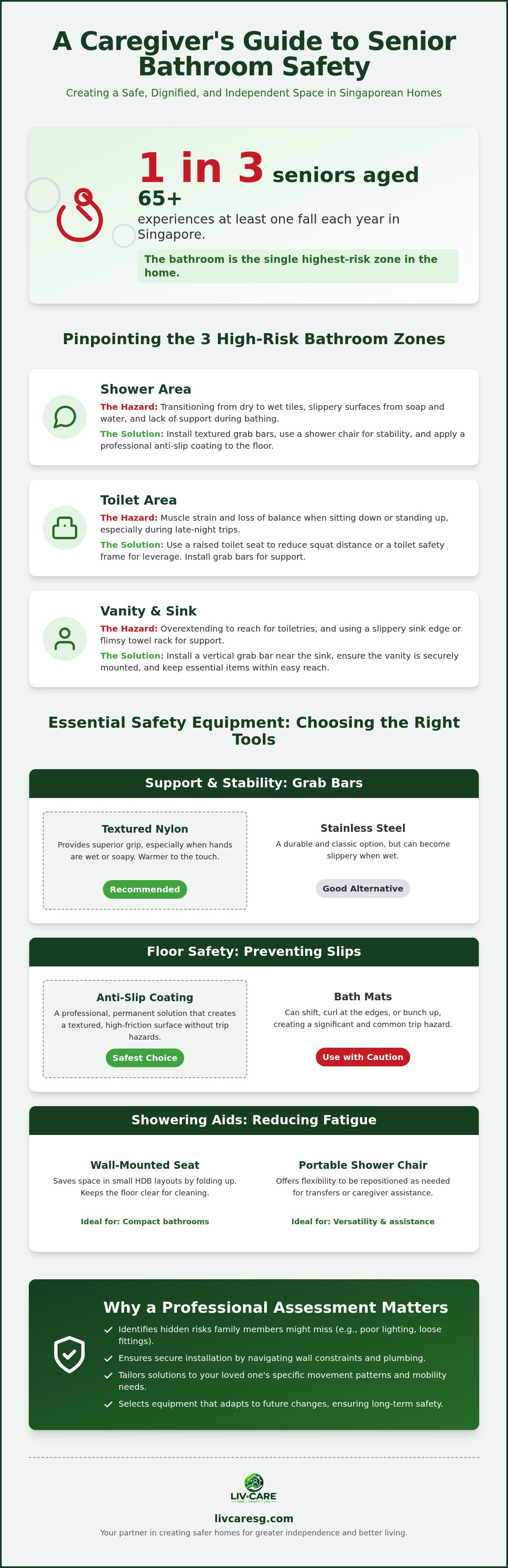
Did you know that one in three individuals aged 65 and above in Singapore experiences at least one fall every year? As a caregiver, you're likely all too aware that the bathroom is the highest-risk zone in the home, especially during those late-night trips. It's stressful to worry about slippery tiles or whether a grab bar will actually hold up in our humid climate. We understand that you want a space that's safe but doesn't feel like a clinical ward.
This guide will help you select the right bathroom safety equipment Singapore homes actually need to prevent injuries while preserving your loved one's independence. We'll explore essential hardware like grab bars and shower chairs, navigate HDB EASE subsidies for 2026, and show you how to maximize safety in small layouts. You'll gain the confidence to create a secure, dignified environment for your family.
Table of Contents
Identifying High-Risk Zones in Singaporean Bathrooms
Singapore's high humidity, often exceeding 80%, means bathroom surfaces stay damp for hours. This persistent moisture creates an exceptionally hazardous environment for seniors with reduced balance. To protect your family, you must adopt a fall-prevention mindset. This involves looking for potential "grip failures" where a senior might reach for a flimsy towel rack or a slippery sink edge. Identify these hazards early to install the right bathroom safety equipment Singapore professionals recommend before an accident occurs.
To better understand these hazards, watch this helpful video:
We've identified three critical risk zones in local homes. First, the shower entry is dangerous because of the sudden transition from dry to wet tiles. Second, the toilet transition requires controlled muscle movement that many seniors struggle with. Finally, the vanity area often leads to overextension when reaching for toiletries. Installing properly rated Grab bars in these specific spots provides the stability needed to navigate these transitions safely.
Limited space in standard HDB layouts makes mobility aid usage tricky. You can't simply add bulky chairs without blocking the walking path. Equipment must be compact and durable enough to withstand constant exposure to water. Selecting tools that fit your specific floor plan is vital for maintaining a clear, safe route while choosing bathroom safety equipment Singapore providers offer.
The Role of Professional Home Care Assessment
A professional home care assessment Singapore identifies risks that family members might miss, like inadequate lighting or loose floor traps. These assessments help you navigate complex plumbing and wall constraints, ensuring that every installation is secure. It's the most reliable way to choose equipment that matches your loved one’s specific mobility needs and your home's unique architecture.
Essential Bathroom Safety Equipment: A Comparative Roundup
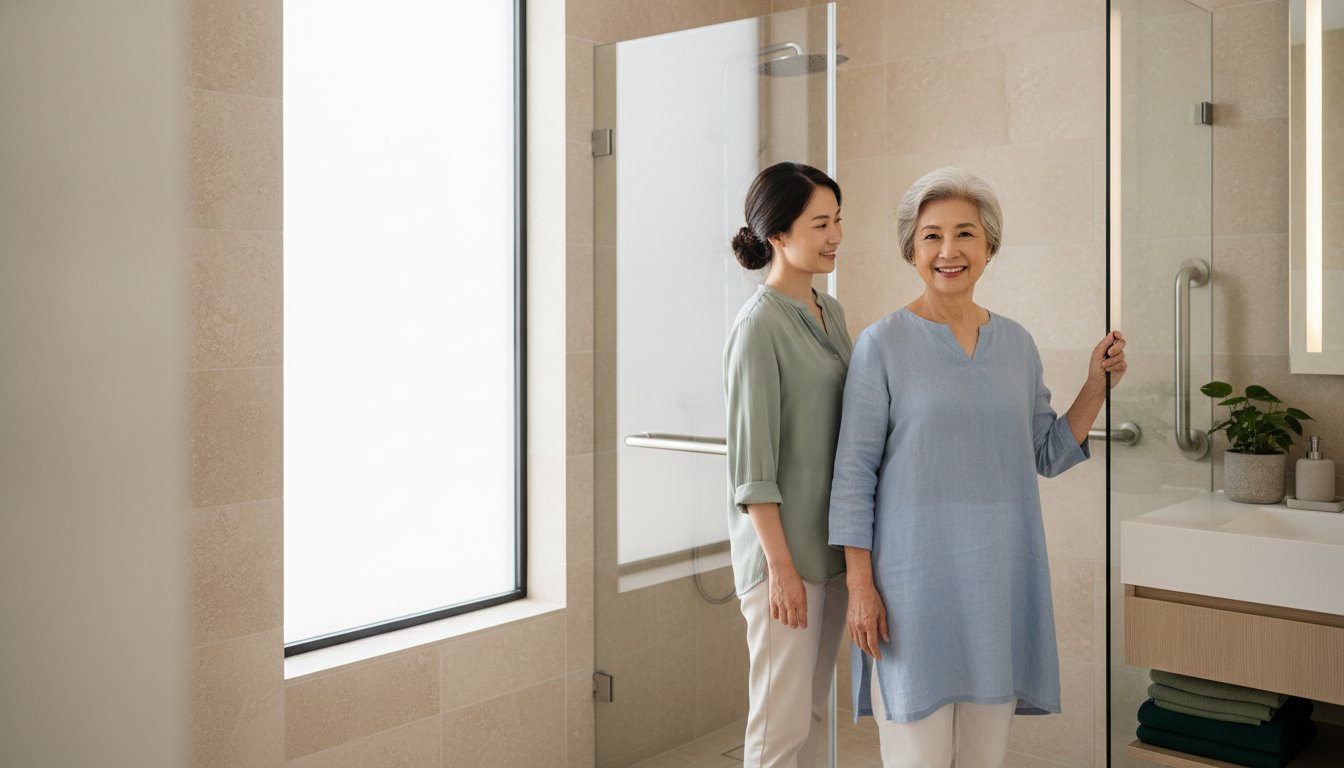
Selecting the right bathroom safety equipment Singapore homes require depends on balancing available space with specific support needs. Grab bars are foundational for any modification. While stainless steel is a durable classic, textured nylon grips provide superior traction when hands are wet or soapy. Fold-down bars are particularly helpful in narrow layouts where a permanent fixture might block a wheelchair or walking aid. Many families can now access subsidies for ageing-friendly fittings, making these high-quality upgrades more accessible for both HDB and private residences.
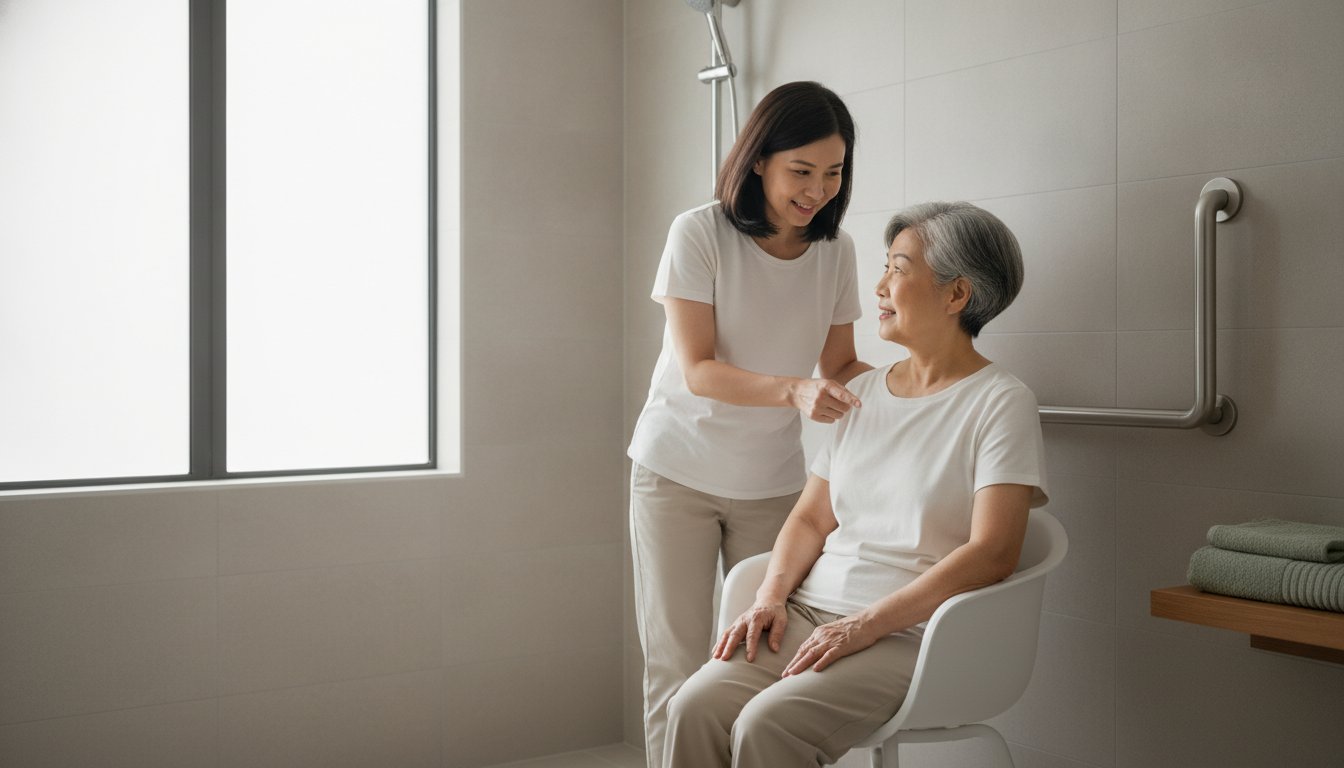
For showering, wall-mounted seats keep the floor clear and easy to clean, but portable chairs allow you to reposition the user as needed. Toilet safety is equally vital for independence. A raised toilet seat reduces the distance a senior needs to squat, which protects the knees and hips. If a user requires more leverage to stand, a standalone safety frame is often more stable than a simple seat attachment. For floor safety, professional anti-slip coatings are generally safer than mats. Mats can shift or curl at the edges, creating a trip hazard for those with unsteady gaits.
Shower Chairs vs. Commode Chairs: Dignity and Functionality
It's important to distinguish between these two tools to ensure comfort. Shower chairs focus on providing a stable base during bathing to prevent fatigue and slips. Commode chairs are designed for users with significant mobility restrictions who find it difficult to reach the bathroom in time. Choosing the right chair preserves a senior's dignity by enabling semi-independent hygiene in a safe environment. Medical-grade bathroom chairs are built to meet rigorous weight capacity standards to ensure long-term user safety. Feel free to explore our curated selection of safety tools to find the best fit for your home's layout.
Implementation and Ongoing Care Coordination
Implementing safety measures requires a methodical approach to ensure the home remains a sanctuary. Start by conducting a thorough walkthrough with the senior. Observe their natural movement patterns to identify where they instinctively reach for support or lose their footing. Next, select equipment based on both current mobility and projected changes. It's often more practical to install versatile, high-capacity aids now rather than making repeated, stressful modifications later as needs become more urgent.
Professional installation is the most critical step for weight-bearing security. Different wall types in Singapore, ranging from reinforced concrete in HDB flats to hollow tiles in older private properties, require specific anchors to prevent equipment failure. Once the setup is complete, take the time to educate both the user and the caregiver on proper maintenance. Even the best bathroom safety equipment Singapore has to offer requires regular checks to ensure screws remain tight and textured surfaces stay slip-resistant despite the constant exposure to our local humidity.
Long-Term Support through Care Membership
Safety isn't a one-time project; it's an ongoing commitment to well-being. Our Care Membership provides a structured solution for families as their caregiving requirements evolve over time. This dedicated coordination ensures your bathroom safety strategy adapts as mobility levels change, offering professional guidance through every stage of the journey. By staying proactive, you maintain a fall-proof environment that respects the user's independence and dignity long after the initial installation is complete.
Building a Safer Home for the Future
Creating a fall-proof environment is a vital step toward ensuring your loved one’s long-term independence. By identifying high-risk zones and selecting durable bathroom safety equipment Singapore homes require, you significantly reduce the daily stress of caregiving. It's important to remember that professional installation and regular maintenance are just as essential as the tools themselves to ensure lasting security. These small changes preserve dignity while providing peace of mind for the entire household.
Our team provides expert advice tailored specifically to Singaporean home layouts. You can visit our showroom to experience the equipment firsthand or explore how our Care Membership offers personalized coordination as your needs change. We invite you to browse our curated selection of bathroom safety equipment at Liv.Care. Taking these methodical steps today builds a safer, more confident environment for your family.
Frequently Asked Questions
Does HDB provide subsidies for bathroom safety equipment installation?
Yes, the HDB EASE (Enhancement for Active Seniors) programme provides significant subsidies for bathroom safety equipment Singapore residents need. For HDB flats, the government covers up to 95% of the cost for items like grab bars and slip-resistant flooring. As of 2026, private homeowners can also access EASE Private vouchers to offset 75% of the cost for selected safety fittings.
Can I install grab bars in a rental flat without drilling into the tiles?
You can use non-permanent options like tension poles or high-quality suction-cup bars, but these aren't as secure as drilled fixtures. For rental flats, it's best to consult your landlord or HDB about temporary modifications. Suction bars rely on a perfect vacuum seal and can fail if tiles are porous or have grout lines, making them less reliable for heavy use.
What is the difference between a toilet safety rail and a grab bar?
A toilet safety rail is a standalone frame or a seat attachment that provides armrests on both sides for leverage. In contrast, a grab bar is a fixed hardware piece mounted directly to the wall. While grab bars offer higher weight-bearing capacity, safety rails are often easier to install in small layouts where wall space is limited near the toilet fixture.
How do I know if my bathroom wall can support a heavy-duty grab bar?
Determining wall strength requires identifying the base material, such as reinforced concrete or hollow clay tiles. Concrete walls in most HDB flats provide excellent support, while tiled partition walls may need specialized anchors or reinforcement. A professional home care assessment is the most reliable way to verify if your walls can safely handle the load of heavy-duty bathroom safety equipment Singapore seniors require.
Comments