
Fall Prevention for Seniors in Singapore: The 2026 Home Safety Checklist

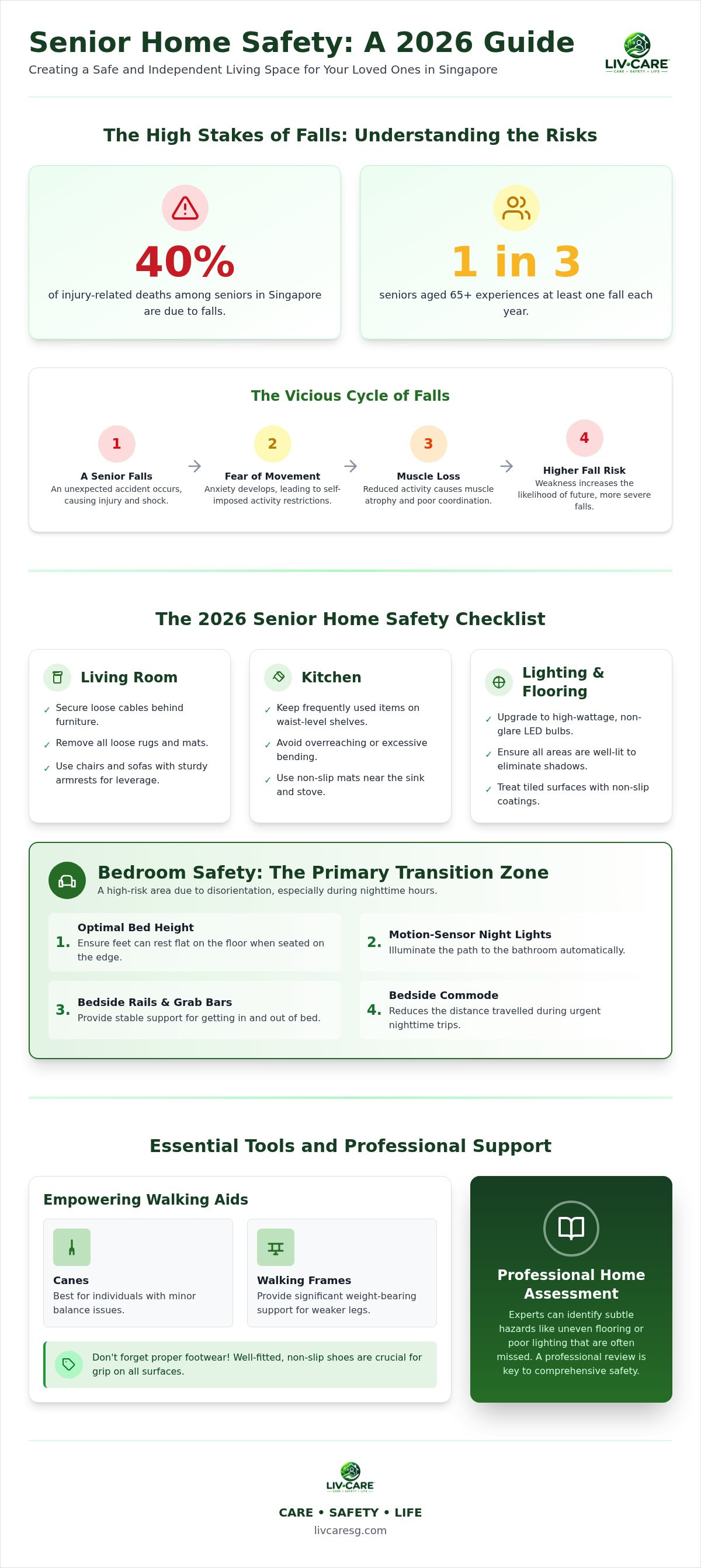
Did you know that falls account for 40% of injury-related deaths among the elderly in Singapore? It's a statistic that keeps many local caregivers awake at night, worrying about hip fractures or the sudden loss of a loved one's independence. You want your home to remain a sanctuary, not a clinical space, yet the fear of a preventable accident is always there. This 2026 guide provides a clear, room-by-room plan to secure your living space while maintaining its warmth and comfort. We'll explore essential mobility aids and specific strategies for bedroom safety for elderly Singapore residents, including how to leverage the latest EASE (Private) subsidies to protect your family. From non-slip solutions to stable walking aids, you'll discover how to create a supportive environment that fosters confidence and peace of mind for the long term.
Table of Contents
The High Stakes of Falls: Understanding the Risks in 2026
Effective fall prevention isn't just about clearing floor clutter. It requires a holistic approach that integrates home modifications, proactive health management, and appropriate assistive technology. In Singapore, roughly one-third of seniors aged 65 and above experience at least one fall each year. These incidents frequently occur in the bedroom or bathroom during routine daily transitions. "In Singapore, falls account for nearly 40% of injury-related deaths among seniors, making bedroom safety for elderly Singapore homes a critical priority for 2026."
A single tumble often triggers a destructive "vicious cycle." When a senior falls, they typically develop a profound fear of movement. This anxiety leads to self-imposed activity restrictions, which quickly cause muscle atrophy and diminished coordination. Consequently, this loss of physical strength significantly increases the likelihood of future accidents. Breaking this cycle involves implementing global fall prevention strategies that combine environmental changes with targeted physical support.
Biological Factors: Why Seniors Are More At Risk
Biological changes play a major role in reducing stability, especially during midnight trips to the washroom. Diminished vision and balance disorders make it difficult to navigate dimly lit spaces safely. Additionally, certain medication side effects may cause dizziness or sudden blood pressure drops upon standing. In Singapore, the prevalence of osteoporosis makes these falls even more dangerous, as brittle bones are highly susceptible to fractures. Caregivers must prioritise regular eye checks and medication reviews alongside physical aids to ensure long-term stability.
The 2026 Senior Home Safety Checklist: Room-by-Room
Creating a safer environment starts with a systematic assessment of every living space. In the living room, you should secure loose cables behind furniture and remove all loose rugs, which are common trip hazards. Ensure that sofas and chairs have sturdy armrests. These provide essential leverage for seniors when standing up. In the kitchen, reorganize cabinets to keep frequently used items on waist-level shelves. This prevents the need for overreaching or bending on floors that may become slippery during meal preparation.
Lighting and flooring are foundational to home safety. Upgrade to high-wattage, non-glare LED bulbs to eliminate shadows. You should also treat all tiled surfaces with non-slip coatings. These measures align with the objectives of Singapore's national health programmes, which emphasize environmental modifications to reduce injury risks. Such structural changes are often the most effective way to prevent hospitalisation and enhance bedroom safety for elderly Singapore homes.
Bedroom Safety: The Primary Transition Zone
The bedroom represents a high-risk area because seniors are often disoriented when waking up at night. Maintaining optimal bedroom safety for elderly Singapore residents involves ensuring the bed height allows feet to rest flat on the floor. It's also vital to install motion-sensor night lights to illuminate the path to the washroom. To further secure these transitions, consider installing toilet safety frames or bedside rails to assist with transfers. Using bathroom safety equipment Singapore, such as a bedside commode, can significantly reduce the distance travelled during the night. For a more comprehensive look at protective gear, you can browse our curated mobility and safety solutions.
Essential Tools and Professional Support for Prevention
Walking aids should be viewed as empowering tools that preserve independence. They aren't symbols of frailty. Selecting the right equipment depends on the user's specific mobility level. For instance, canes assist with minor balance issues. In contrast, walking aids for elderly Singapore like sturdy walking frames provide necessary weight-bearing support for those with weaker legs. Beyond equipment, proper footwear is vital. Well-fitted, non-slip shoes offer the grip needed on various floor surfaces, especially when moving between the bedroom and bathroom. Even with the best gear, a professional home care assessment Singapore, perhaps from a trusted provider like Liv.Care Singapore, is often necessary. These experts spot subtle hazards, like slightly uneven flooring or poor lighting, that directly impact bedroom safety for elderly Singapore homes.
The Caregiver’s Role: Monitoring and Maintenance
Caregiving involves consistent vigilance. You should regularly inspect all safety equipment to ensure it remains functional and safe. Check the rubber tips on walking frames for wear and tear, as worn tips lose their grip. Verify that bed rails are securely attached and do not wobble during use. A caregiver support Singapore programme provides valuable ongoing advice and priority access to essential safety resources. These programmes help you stay informed about the latest bedroom safety for elderly Singapore standards and maintenance protocols. To truly secure your home, consider scheduling a professional safety review. This proactive step ensures your loved one enjoys a safe, dignified, and stable ageing environment.
Securing Your Home for the Years Ahead
Fall prevention is an ongoing commitment to your loved one's independence and longevity. By combining proactive environmental modifications with stable mobility aids, you can significantly reduce the risks of injury. Prioritising bedroom safety for elderly Singapore households ensures that even midnight transitions remain secure and manageable. We are here to partner with you as a knowledgeable guide throughout this caregiving journey.
Our team offers personalised Home Care Assessments to identify specific hazards you might miss. You can also join our dedicated Care Membership for long-term support and access to expert-curated safety equipment. Don't wait for an accident to occur before making these essential changes. Browse our curated selection of senior safety products and mobility aids to begin your home transformation. With a clear plan and the right support, you can provide your family with the lasting security and comfort they deserve.
Frequently Asked Questions
What are the top three fall hazards in a typical Singaporean bedroom?
The three primary hazards include unsecured floor coverings, inadequate lighting for midnight transitions, and cluttered walkways. Loose rugs often slide on tiled floors common in local homes. Dim lighting makes it difficult to spot obstacles when waking up disoriented. Additionally, furniture without sturdy grips fails to provide support during transfers. Addressing these specific areas is vital for bedroom safety for elderly Singapore residents.
How do I choose the right bed height for an elderly parent to prevent falls?
An ideal bed height allows the senior to sit on the edge with both feet resting flat on the floor while their knees are bent at a 90-degree angle. If the bed is too high, they may slip while climbing down. If it is too low, they might struggle to stand up. Adjusting the mattress or frame height ensures safer, more controlled transitions every morning.
Are there HDB subsidies available for bedroom safety modifications like bed rails?
HDB residents can access subsidies through the Enhancement for Active Seniors (EASE) programme, which covers grab bars and non-slip flooring. For those in private housing, the EASE (Private) scheme launched in April 2026 offers vouchers to offset costs for senior-friendly fittings. These programmes significantly improve bedroom safety for elderly Singapore households by providing a more stable environment for daily activities.
How can a professional home care assessment help identify hidden fall risks?
A professional assessment identifies subtle environmental dangers that family members often overlook. Experts evaluate floor traction, lighting levels, and the ergonomic suitability of existing furniture. They provide a structured plan tailored to the senior's specific mobility level. This proactive approach ensures that safety interventions are effective and targeted. It's the first step toward a truly secure and independent home environment.
Comments