
Home Care Assessment Singapore: Step-by-Step Guide

Most families wait for a fall to happen before they realize their home isn't equipped for senior living. If you're currently managing a hospital discharge or worrying about a parent's safety while you're at work, that stress is completely valid. You want them to stay independent, but you also need to know they're secure. A professional home care assessment Singapore provides the clarity you need to move forward with confidence.
It's about more than just clearing floor clutter; it's a strategic approach to transforming a standard house into a supportive care environment. This guide shows you how to evaluate your home for senior safety and mobility to ensure a secure, independent living environment. We'll provide a clear checklist for home safety and professional guidance on which equipment is truly necessary. You'll gain a practical roadmap to protect your parent's independence and your own peace of mind.
Table of Contents
What is a Home Care Assessment in Singapore?
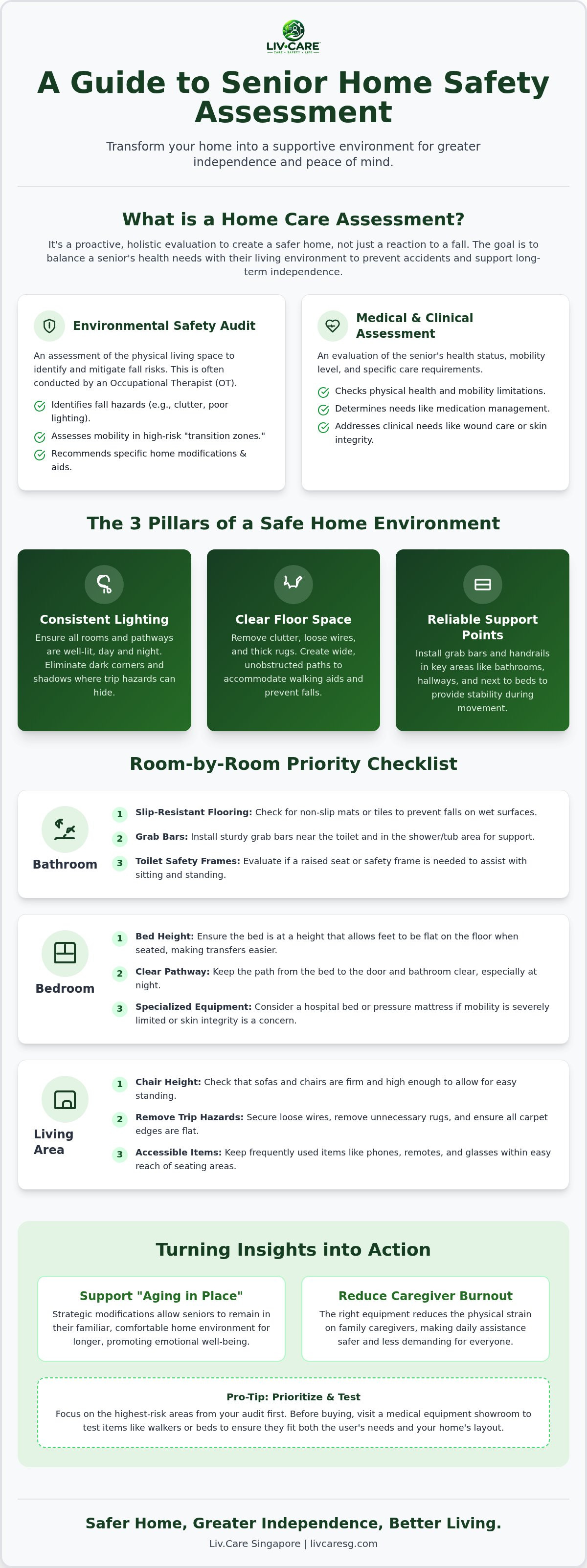
A home care assessment Singapore is a holistic evaluation that looks at both a senior's physical health and their physical living environment. It functions as supportive care provided in the home, ensuring the residence is optimized for safety and comfort. The goal is two-fold: identifying clinical care needs, such as wound management or medication assistance, and spotting environmental hazards that could lead to falls.
To better understand how these evaluations work in practice, watch this helpful overview:
Singaporean families often require this service during hospital-to-home transitions or when a parent's mobility starts to decline. Without a professional roadmap, it's common to fall into "panic buying" mode. Families might rush to buy medical equipment that isn't necessary or doesn't fit their home's layout. A structured home care assessment Singapore prevents these costly mistakes by ensuring every purchase serves a specific, verified purpose.
The Difference Between Medical and Environmental Assessments
Medical assessments focus on clinical health, but environmental audits prioritize fall prevention and mobility. In the local context, Occupational Therapists (OTs) play a vital role in these audits. They evaluate how a senior moves through their HDB or private property to determine if they need specific walking aids for elderly Singapore or bathroom modifications. By combining health data with a safety audit, you create a residence that supports long-term independence.
How to Conduct a Home Safety and Mobility Audit
To conduct an effective home care assessment Singapore, you must walk through your residence from the perspective of someone with limited mobility. Focus on "transition zones" where movement changes, such as doorways, bed-to-chair transfers, and bathroom entries. These are the areas where falls most frequently occur. As you move through each room, evaluate the Three Pillars of Safety: consistent lighting to prevent shadows, clear floor space to accommodate walking aids, and reliable support points for steadying oneself.
Recording these findings is essential. Detailed notes help professional care coordinators identify specific hardware needs. This documentation also becomes valuable when preparing for a Home Caregiving Grant assessment, which often requires a clear picture of daily living challenges.
Room-by-Room Safety Checklist
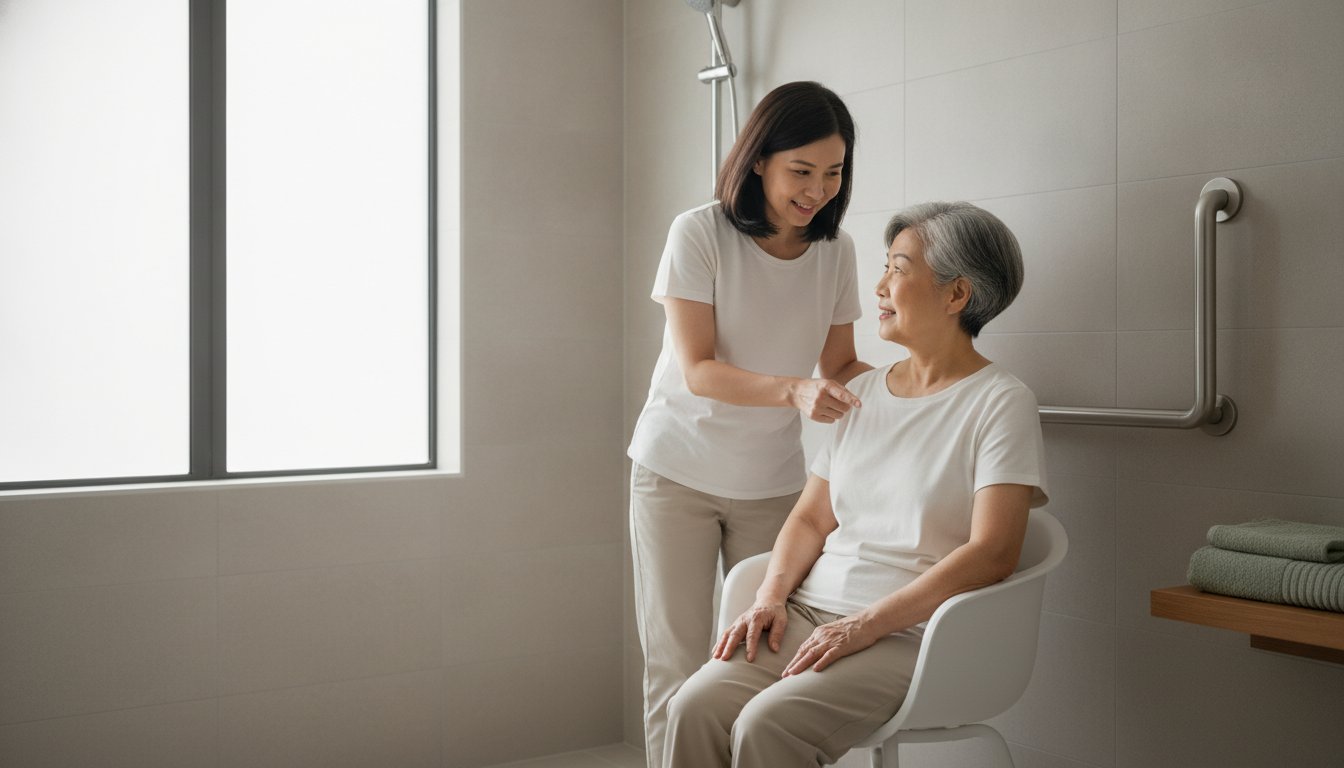
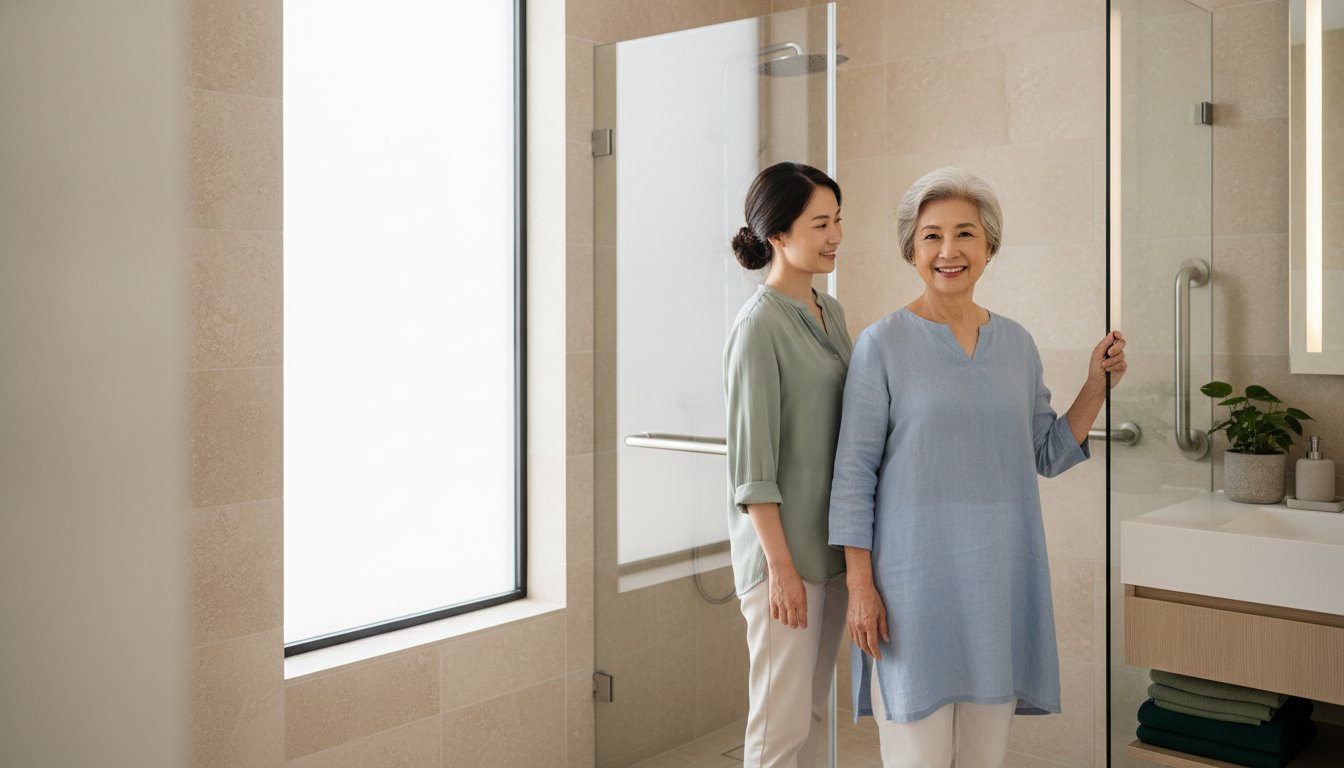
In the bathroom, check for slip-resistant flooring and evaluate if toilet safety frames are needed to assist with sitting and standing securely. You should also check that grab bars are installed near the shower and toilet areas to provide extra stability during transitions.
Next, assess the bedroom by checking bed height. If transfers are becoming difficult or skin integrity is a concern, hospital beds or specialized pressure mattresses may be necessary. In the living area, ensure chair heights allow for easy rising and remove trip hazards like loose wires or thick carpets. If you need help identifying these risks, a professional home care assessment Singapore provides a structured way to prioritize your home modifications.
Implementing Assessment Results with the Right Equipment
Once you've completed the audit, you need to turn those observations into action. Prioritize equipment purchases based on the high-risk findings of your home care assessment Singapore. Focusing on the most dangerous transition zones first ensures the immediate safety of your loved one. This strategic approach supports the concept of "Aging in Place," allowing seniors to remain in familiar surroundings for as long as possible. By installing the right tools early, you significantly reduce the physical strain on family members, effectively preventing caregiver burnout.
Before committing to a purchase, visit a medical equipment showroom to test the recommendations. Seeing the equipment in person helps you verify if a hospital bed or a specific walker fits your parent's physical needs and your home's layout. It's much better to test a product's height and weight in a controlled environment than to struggle with an unsuitable item at home. Remember that mobility isn't static; scheduling a regular home care assessment Singapore every six months ensures your setup evolves alongside your parent's changing requirements.
Choosing Equipment for Long-Term Comfort
Getting a professional fit is vital for items like wheelchairs in Singapore. An ill-fitting chair causes discomfort and may even lead to secondary health issues like pressure sores. To manage these long-term needs, a Care Membership provides ongoing equipment maintenance and expert care coordination, giving you one less thing to worry about. When selecting bathroom safety equipment, look for designs that balance clinical function with home aesthetics. Modern grab bars and shower chairs now come in styles that blend into your decor. This helps your parent feel they're living in a home rather than a clinical facility, which is essential for their dignity and emotional well-being.
Securing Your Loved One's Independence at Home
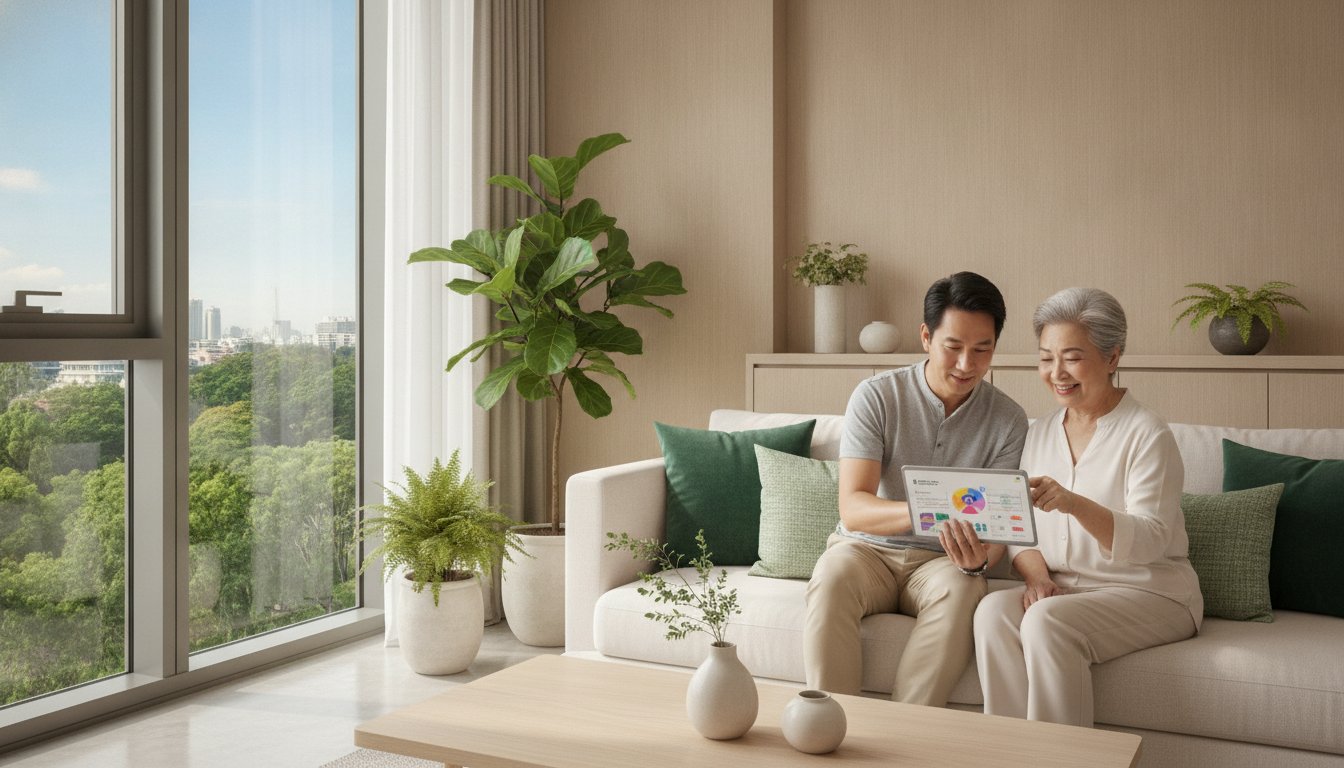
Creating a safe home environment is a journey that starts with a single, structured step. You now understand that a successful transition relies on identifying high-risk zones and selecting equipment that truly fits your parent's unique mobility needs. By moving away from reactive "panic buying" and toward a planned strategy, you ensure your home remains a place of comfort and dignity. A professional home care assessment Singapore is the most reliable way to bridge the gap between hospital care and independent living.
We invite you to Book a Home Care Assessment with Liv.Care Singapore to receive personalized care coordination and access to our curated selection of mobility aids. You can also visit our showroom for hands-on equipment testing to verify every recommendation before you buy. You don't have to manage this transition alone; the right support makes all the difference in your caregiving journey.
Frequently Asked Questions
How much does a home care assessment cost in Singapore?
A home care assessment Singapore typically costs between $100 and $300 for a general one-off evaluation. For severe disability assessments, the Agency for Integrated Care stipulates $100 for in-clinic visits and $250 for house calls. These fees vary based on the provider and the depth of the audit required to ensure total home safety.
Who is qualified to perform a home care assessment?
Occupational Therapists (OTs), registered nurses, and specialized care coordinators are the primary professionals qualified to conduct these evaluations. OTs are particularly skilled at analyzing how a senior's physical limitations interact with their home layout. For government grant applications, you'll often need an assessor accredited by the Agency for Integrated Care to ensure the report meets official standards.
Can I get subsidies for home modifications after an assessment?
Yes, Singaporean families can access several financial schemes to help with home modifications. The EASE programme provides subsidies for installing grab bars, ramps, and slip-resistant flooring. To qualify for these or the Home Caregiving Grant, a home care assessment Singapore is typically required to document the senior's physical needs so it's clear the modifications are medically necessary.
What happens during a professional home care visit?
During a visit, the assessor performs a systematic walk-through of your residence to identify fall risks. They observe the senior performing daily activities, such as transferring from a bed to a chair or entering the bathroom. The professional checks for adequate lighting and floor clearance before recommending specific mobility aids or safety equipment tailored to the senior's requirements.
Comments