
Mobility Aids for Parkinson's: 2026 Singapore Guide

Imagine you're walking through your narrow HDB hallway when your feet suddenly feel glued to the floor; a "freezing" episode that turns a simple trip to the kitchen into a moment of intense anxiety. If you're managing these symptoms, you likely feel that the fear of a sudden fall is a constant companion, and the physical strain on your family during daily transfers is becoming exhausting. Finding the right mobility aids for parkinson's patients Singapore is about more than just basic stability; it's about reclaiming rhythm and confidence. This 2026 guide will help you select equipment that specifically addresses neurological gait issues to enhance independence at home. We'll explore specialized walkers with sensory cues, navigate the latest PMA regulations, and explain how to access government subsidies like the Seniors' Mobility and Enabling Fund to make daily movement safer and more manageable.
Table of Contents
Addressing Parkinson's Gait: Why Standard Walkers Aren't Always Enough
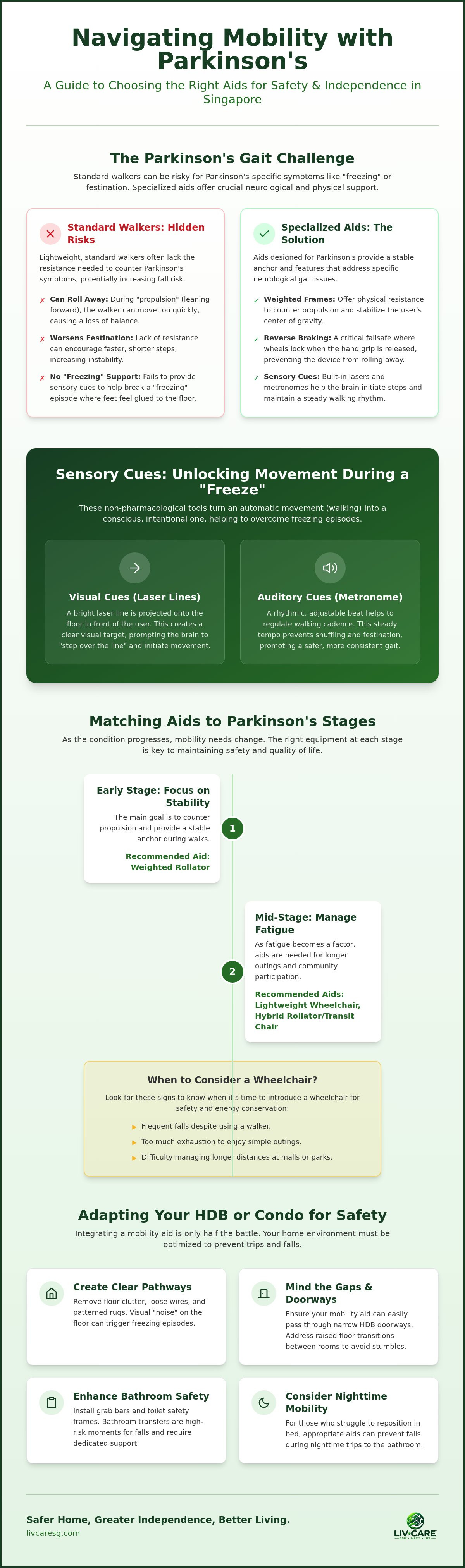
Many families assume any walking aid will suffice, but Parkinson's presents unique neurological challenges that standard equipment simply can't solve. Unlike general muscle weakness, a Parkinsonian gait involves "freezing" episodes and festination, where steps become involuntarily faster and shorter. Standard "push" walkers often lack the resistance needed for these symptoms. If a patient experiences propulsion, leaning too far forward, a lightweight walker can actually roll away and cause a fall. Specialized mobility aids for parkinson's patients Singapore are engineered with weighted frames and sophisticated braking systems to provide a stable anchor rather than just a light support.
Choosing the right device reduces the heavy cognitive load on the patient. When the brain struggles to initiate movement, every step requires intense mental effort. The right aid acts as a partner in the walking process; it allows for smoother transitions through narrow HDB doorways or onto different floor surfaces by providing consistent, predictable feedback to the user's body.
Visual and Auditory Cues in Modern Mobility Aids
Sensory cueing is a non-pharmacological method to manage Parkinson's freezing. Laser-projected lines act as a visual "target" on the floor, helping the brain initiate a step by turning an automatic movement into a conscious, intentional one. If a patient feels stuck, they simply aim to step over the bright line projected by their rollator. Auditory cues, such as a rhythmic beat from a built-in metronome, help maintain a steady cadence and prevent the dangerous shuffling associated with gait festination. By integrating these cues, mobility aids for parkinson's patients Singapore provide a reliable way to regain movement during a "freeze" without relying solely on caregiver physical support.
Comparing Mobility Aids for Different Stages of Parkinson's
In the early stages of the condition, stability is the primary priority. Weighted rollators are essential because they provide the physical resistance needed to counter "propulsion" or the tendency to lean forward. A systematic review of mobility aids highlights how specialized devices can significantly improve gait parameters and safety. For families in Singapore, selecting mobility aids for parkinson's patients Singapore often involves looking for reverse-braking systems. These systems act as a critical failsafe; the wheels lock automatically if the user releases their grip. It prevents the device from rolling away during a sudden freeze or a dizzy spell.
As symptoms evolve into the mid-stage, fatigue often limits community participation. This is the ideal time to introduce lightweight wheelchairs in Singapore for longer outings at the mall or medical appointments. Specialized mobility scooters also play a role in maintaining independence. They allow users to navigate their neighborhood or use the MRT without the physical overexertion that leads to increased tremors or gait issues.
Wheelchairs vs. Rollators: When to Make the Switch
You'll know it's time to consider a wheelchair when your loved one experiences frequent falls despite using a walker, or if they find themselves too exhausted to enjoy a simple outing. Hybrid devices are a versatile middle ground; they function as a rollator for active exercise and quickly convert into a transit wheelchair when the user needs to rest. We recommend testing these options at a medical equipment showroom to ensure the patient feels comfortable and in control. You can explore our walking aid collection to find a model that matches your specific mobility goals.
Integrating Mobility Aids into the Singaporean Home Environment
Selecting mobility aids for parkinson's patients Singapore is only the first step; successful integration depends on your home layout. Typical HDB and condo units often feature narrow doorways and raised floor transitions that can pose significant challenges. It's essential to remove floor clutter and patterned rugs, as visual "noise" can often trigger sudden freezing episodes. Ensuring clear, wide pathways allows for a smoother, more predictable walking rhythm throughout the day.
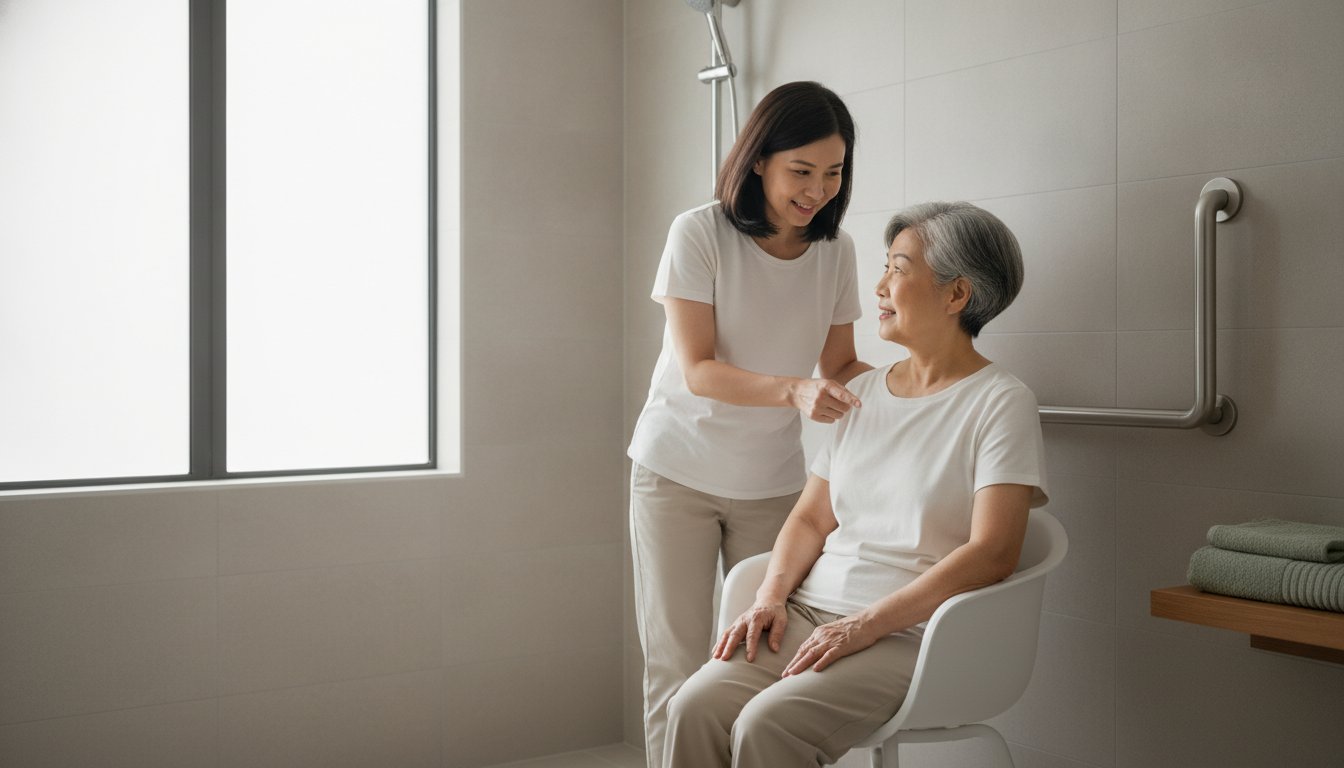
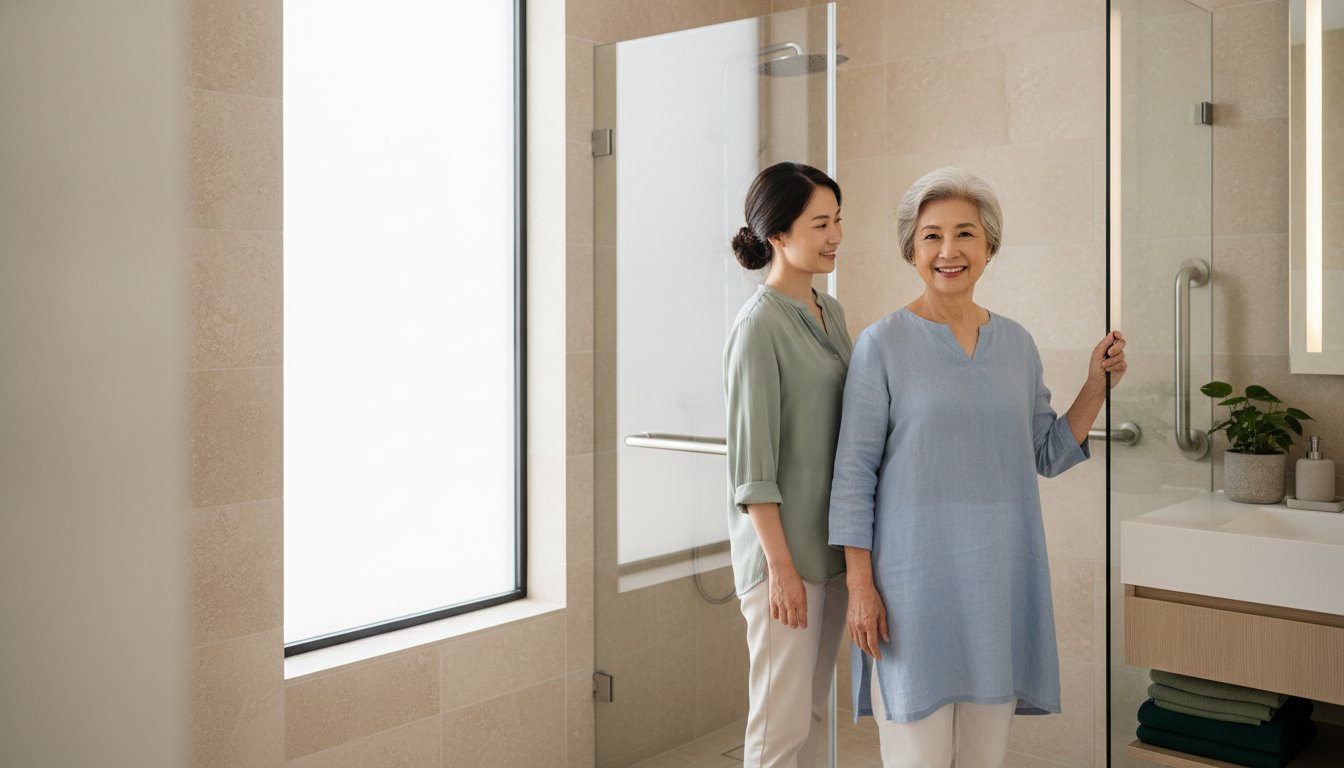
Safe movement doesn't stop at the hallway. Installing toilet safety frames provides the necessary support for bathroom transfers, which are high-risk moments for falls. Nighttime mobility is equally important. For patients who find it difficult to reposition themselves in bed, pressure mattresses help manage skin health and comfort when movement is restricted during the night.
The Value of Professional Home Care Assessments
A professional home care assessment identifies specific "freeze triggers," such as doorway thresholds or lighting glare, that caregivers might miss. Through our Liv.Care Membership, we provide a supportive partnership that allows for equipment adjustments as mobility needs change. Before introducing a new mobility scooter or electric wheelchair, use this checklist to prepare your home:
Confirm doorway clearance is at least 75cm for comfortable passage.
Install low-profile ramps over floor transitions or steps.
Establish a dedicated charging station near an accessible power point.
Clear a 1.5m turning radius in the main living area.
By tailoring the environment to the specific needs of the user, mobility aids for parkinson's patients Singapore become tools of true independence rather than just pieces of equipment. This holistic approach ensures that every room in the home remains accessible and safe.
Empowering Your Journey Toward Safer Movement
Managing Parkinson's requires a shift from general support to specialized solutions that respect the neurological nature of the condition. We've explored how weighted frames and sensory cues solve the specific problem of freezing, and how transitioning to wheelchairs or scooters helps manage fatigue during different stages. By auditing your home environment for "freeze triggers," you create a space where movement feels safe again. Every adjustment you make is a step toward preserving the activities and independence that matter most to your family.
Selecting the right mobility aids for parkinson's patients Singapore is a journey of adaptation, and you don't have to navigate it alone. Our team provides Personalized Home Care Assessments to ensure your equipment fits your specific HDB or condo layout perfectly. With our Care Membership, you'll receive ongoing support as your needs evolve. Explore our curated range of Parkinson's-friendly mobility aids today. You can regain your rhythm and confidence at home with the right tools and expert guidance by your side.
Frequently Asked Questions
What is the best type of walker for a Parkinson's patient who 'freezes' often?
Laser-cue rollators are highly effective for patients who experience frequent freezing episodes. These specialized mobility aids for parkinson's patients Singapore project a bright laser line on the floor, providing a clear visual target. By focusing on stepping over the line, the brain can often bypass the neurological block that causes the freeze. This helps the user resume walking with significantly more confidence.
Are electric mobility scooters safe for Parkinson's patients in Singapore?
Electric mobility scooters are safe if the user has sufficient cognitive and upper-body control to operate the steering and brakes. In Singapore, as of June 1, 2026, users must obtain a Certificate of Medical Need to use a mobility scooter. Additionally, these devices must adhere to a 6km/h speed limit on public paths to ensure the safety of all path users.
How do I know if my parent needs a 2-wheeled or 4-wheeled walker?
A 4-wheeled rollator is typically better for Parkinson's because it allows for a more fluid walking rhythm. However, if your parent has significant balance issues or a tendency to lean forward, a weighted 4-wheeled model with a reverse-braking system is safer. We recommend a professional home care assessment to determine which frame type provides the specific stability your parent needs at home.
Does the Singapore government provide subsidies for Parkinson's mobility aids?
Yes, eligible Singaporeans can access significant subsidies through the Seniors' Mobility and Enabling Fund (SMF) or the Assistive Technology Fund (ATF). These schemes can cover up to 90% of the cost for mobility aids for parkinson's patients Singapore. To qualify, applicants generally need a monthly household income per capita of S$4,800 or less and must pass a standard means-test.
How can I prevent my loved one from falling when they first start using a new aid?
Preventing falls starts with professional fitting and ensuring the aid is adjusted to the user's height. It's helpful to practice using the device in a controlled environment, like a showroom, before navigating public spaces. At home, clear all pathways of loose rugs and clutter. Ensure the user feels comfortable engaging the braking system before they attempt to walk long distances alone.
Can mobility aids help with the 'shuffling' gait associated with Parkinson's?
Specialized mobility aids are designed to manage a shuffling gait through sensory stimulation. Devices equipped with rhythmic auditory cues, such as a built-in metronome, provide a steady beat that encourages the user to take longer steps. This rhythmic feedback helps the brain maintain a consistent walking pace, reducing the tendency for steps to become involuntarily shorter and faster during movement.

Comments