
Singapore Elderly Home Safety: 2026 Aging in Place Guide

Did you know that a significant majority of senior falls in Singapore occur within the familiar walls of their own homes? It's natural to feel a constant sense of worry every time your elderly parent navigates a slippery bathroom or a narrow hallway. You want them to enjoy their independence, yet the fear of a hip fracture or a sudden head injury often feels inescapable. It's also common to feel overwhelmed by complex HDB modification rules or confused about which grab bars and mats are truly effective.
This 2026 guide will help you master elderly home safety Singapore standards by transforming your living space into a secure sanctuary. We'll provide a clear, actionable safety checklist and professional insights into the best mobility equipment available. You'll gain the knowledge needed to make informed decisions, ensuring your parents stay safe while giving your family the peace of mind you deserve.
Table of Contents
Identifying Hazards: A Room-by-Room Home Safety Checklist
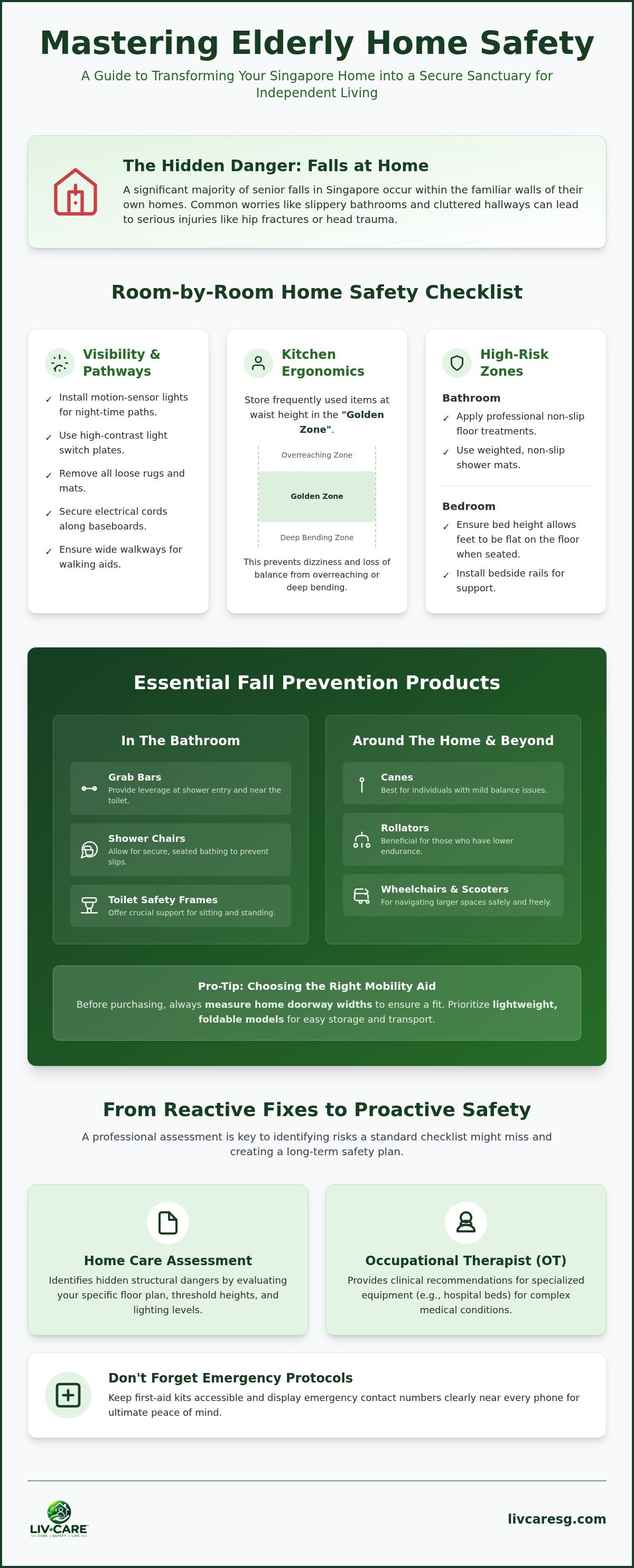
Effective elderly home safety Singapore begins with a systematic sweep of your living environment to eliminate hidden dangers. Visibility is your first line of defense. Install motion-sensor lights along the path from the bedroom to the bathroom to ensure night-time trips are well-lit without fumbling for switches. For standard lighting, use high-contrast switch plates that stand out against the wall, making them easier for seniors with visual impairments to locate quickly.
Floor management requires a strict "clear path" policy. Remove loose rugs or decorative mats, as these are primary tripping hazards on smooth tile floors. Secure all electrical cords along baseboards using cable clips. Prioritize wide walkways that accommodate the turning radius of walking aids or wheelchairs during your furniture layout. A cluttered room isn't just a nuisance; it's a barrier to safe movement.
Kitchen safety often involves ergonomic adjustments. Store frequently used items like rice cookers or heavy kettles at waist height. This "golden zone" prevents overreaching or deep bending, both of which can cause dizziness or a loss of balance. Organizing your cabinets this way ensures daily tasks remain manageable and safe, contributing to better elderly home safety Singapore standards within your household.
High-Risk Zones: Bathroom and Bedroom Safety Strategies
The bathroom remains the most hazardous room due to wet surfaces. Apply professional-grade non-slip treatments to ceramic tiles and use weighted non-slip mats inside shower areas. In the bedroom, evaluate the bed height carefully. A senior should be able to sit on the edge with their feet resting flat on the floor. If they have limited core strength, consider installing bedside rails or transitioning to adjustable hospital beds. These tools provide the necessary leverage to transition from lying to standing without unnecessary strain.
Essential Fall Prevention Products for Singapore Homes
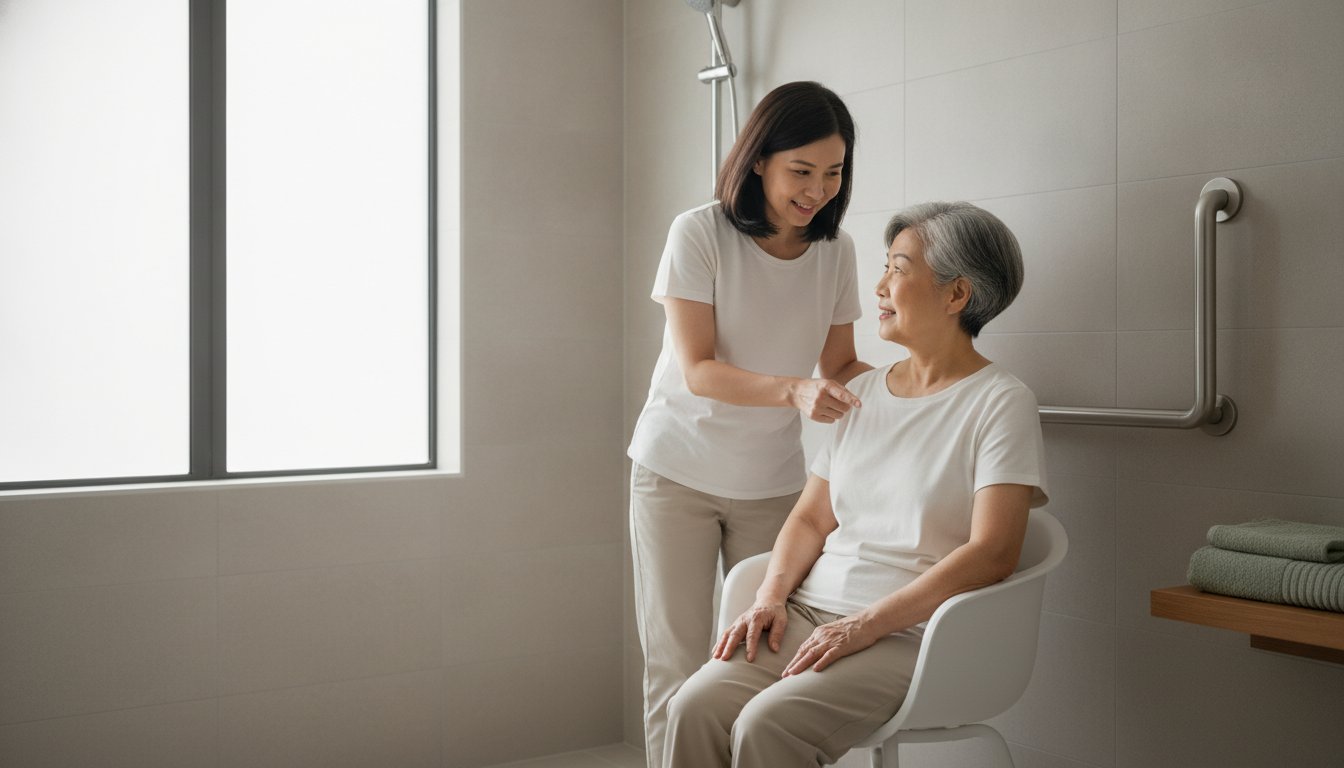
While environmental changes are vital, integrating the right assistive technology is equally critical for elderly home safety Singapore. Bathroom safety equipment provides stability in the most slip-prone areas of the house. Specialized shower chairs allow seniors to sit securely while bathing, while toilet safety frames offer essential support when transitioning from a sitting to a standing position. These tools don't just prevent falls; they help maintain a senior's dignity and independence.
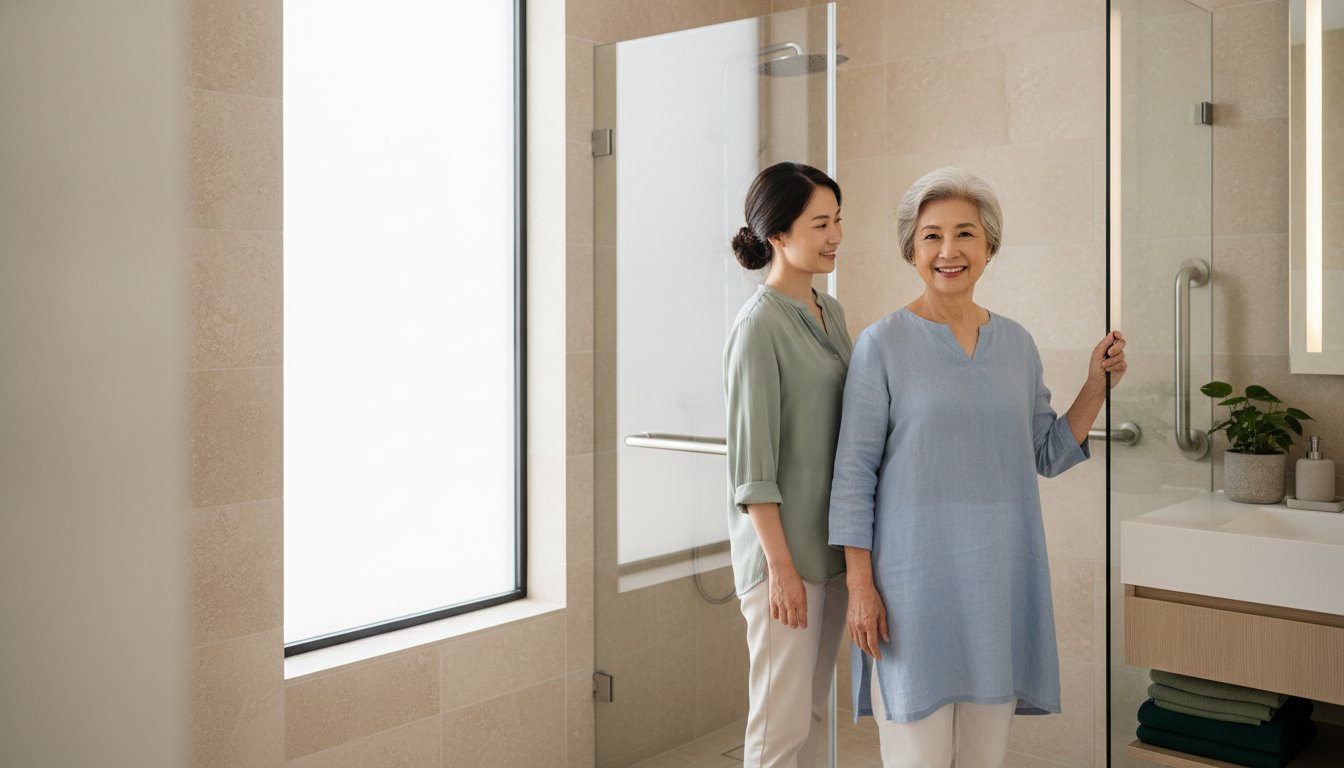
Grab bars are another non-negotiable addition. You should position them at entry points to the shower and near the commode to provide maximum leverage. Properly selected products are a cornerstone of elderly home safety Singapore households rely on for daily security. Beyond the bathroom, consider the senior's mobility outside the home or in larger estates. Walking aids like canes are suitable for those with mild balance issues, whereas rollators benefit those with lower endurance. For those navigating larger residential complexes, mobility scooters with a tight turning radius ensure they can move freely without getting stuck in tight corners.
Selecting the Right Mobility Aid for Your Space
Before purchasing any equipment, it's vital to measure your home's doorway widths. This is especially important when choosing a wheelchair in Singapore to ensure it fits through standard HDB or condo frames. We recommend prioritizing lightweight, foldable models if you have limited storage or plan to transport the aid frequently. You can visit the Liv.Care Singapore Products page to compare technical specifications and find the best fit for your specific floor plan. If you're unsure which model suits your parent's needs, visiting a showroom to test the equipment can provide valuable clarity.
Professional Assessments and Long-Term Safety Management
A professional Home Care Assessment is the essential first step in identifying hidden structural dangers that a standard checklist might overlook. These assessments evaluate your specific floor plan, threshold heights, and lighting levels to ensure your environment supports independent living. When dealing with complex conditions like stroke recovery or advanced mobility issues, an Occupational Therapist plays a vital role. They provide clinical recommendations for specialized equipment, such as hospital beds or pressure mattresses, tailored specifically to the senior's physical requirements.
Beyond hardware, effective safety management includes establishing clear emergency protocols. Ensure first-aid kits are stored at accessible heights and emergency contact numbers are clearly displayed near every phone. This strategy shifts your focus from reactive fixes after an accident to proactive safety management. It's a fundamental shift that strengthens elderly home safety Singapore households need for long-term peace of mind. By planning ahead, you reduce the stress of sudden lifestyle changes and ensure a smoother transition as care needs increase.
The Liv.Care Singapore Advantage: Membership and Ongoing Support
The Care Membership program at Liv.Care Singapore provides a sustainable path for long-term support. Members receive ongoing discounts and priority access to essential safety resources, ensuring your home environment evolves as your parents' care needs change. We also encourage families to visit our physical showroom to touch and feel equipment before installation. Testing a wheelchair or walking aid in person provides a level of certainty regarding comfort and fit that online descriptions simply can't match. You can also read more expert advice on our Blogs to stay updated on 2026 care trends and elderly home safety Singapore innovations.
Securing Your Home for the Years Ahead
Creating a safe living environment is an ongoing journey that combines proactive hazard identification with the right assistive technology. By implementing the room-by-room modifications we've discussed and selecting high-quality mobility aids, you significantly reduce the risk of accidents while preserving your loved one's independence. Professional guidance ensures that no hidden danger is overlooked, providing a structured approach to elderly home safety Singapore families can rely on. As a trusted provider of mobility aids, Liv.Care Singapore offers a curated range of bathroom and bedroom safety equipment designed for long-term reliability. We're here to support you through expert-led evaluations and sustainable care solutions. Book a Home Care Assessment with Liv.Care Singapore today to secure your parents future. You don't have to manage these changes alone; taking this first step today ensures a safer, more confident tomorrow for your whole family.
Frequently Asked Questions
What are the most common causes of elderly falls in Singapore homes?
Most falls in Singapore households occur due to environmental hazards like slippery bathroom tiles and loose area rugs. Poor lighting during night-time bathroom trips is another major contributor. Cluttered walkways also pose significant risks, especially when seniors navigate narrow HDB corridors. Addressing these factors is a core part of improving elderly home safety Singapore residents prioritize for their aging parents' long-term well-being and independence.
How much do basic home safety modifications cost in Singapore?
The total investment for home safety modifications depends on the specific needs of the senior and the layout of the residence. Costs vary based on the number of grab bars installed, the type of non-slip flooring treatments chosen, and whether specialized furniture is required. We recommend a professional assessment to determine a precise budget tailored to your home's unique requirements and structural constraints.
Can I get government subsidies for elderly home safety equipment?
Singaporean households can access various government support schemes to offset safety costs. The Enhancement for Active Seniors (EASE) program provides subsidies for HDB modifications like grab bars and slip-resistant treatment. Additionally, the Seniors' Mobility and Enabling Fund (SMF) offers financial assistance for purchasing assistive devices such as wheelchairs or walking aids. Eligibility usually depends on the household's monthly income and the senior's clinical needs.
How do I know if my parent needs a wheelchair or just a walking frame?
Choosing the right aid depends on your parent's balance and physical endurance. A walking frame or rollator is ideal for those who can still walk but require stability for short distances. If your parent experiences significant fatigue or has a high risk of falling during movement, a wheelchair may be necessary for longer outings. Consulting an occupational therapist is the best way to ensure the device matches their mobility level.
Comments