
Transfer Belt for Elderly Singapore: The 2026 Caregiver’s Guide to Safe Mobility

By 2026, Singapore has officially reached "super-aged" status, with 21% of our population aged 65 and above. This demographic shift means more families are managing care at home, often facing the physical strain of manual lifting. You likely know the quiet fear of a loved one slipping during a chair transfer, or the persistent lower back pain that comes from daily caregiving duties. It's a heavy responsibility that shouldn't rest entirely on your own physical strength.
Using a transfer belt for elderly Singapore homes can transform these moments from stressful hurdles into safe, dignified movements. This guide promises to help you master the essentials of senior handling to protect both your health and your loved one's safety. We'll preview the best equipment options for the current year, explain the difference between gait and transfer belts, and provide the practical techniques you need to move with total confidence every day.
Table of Contents
What is a Transfer Belt and Why is it Essential for Singapore Caregivers?
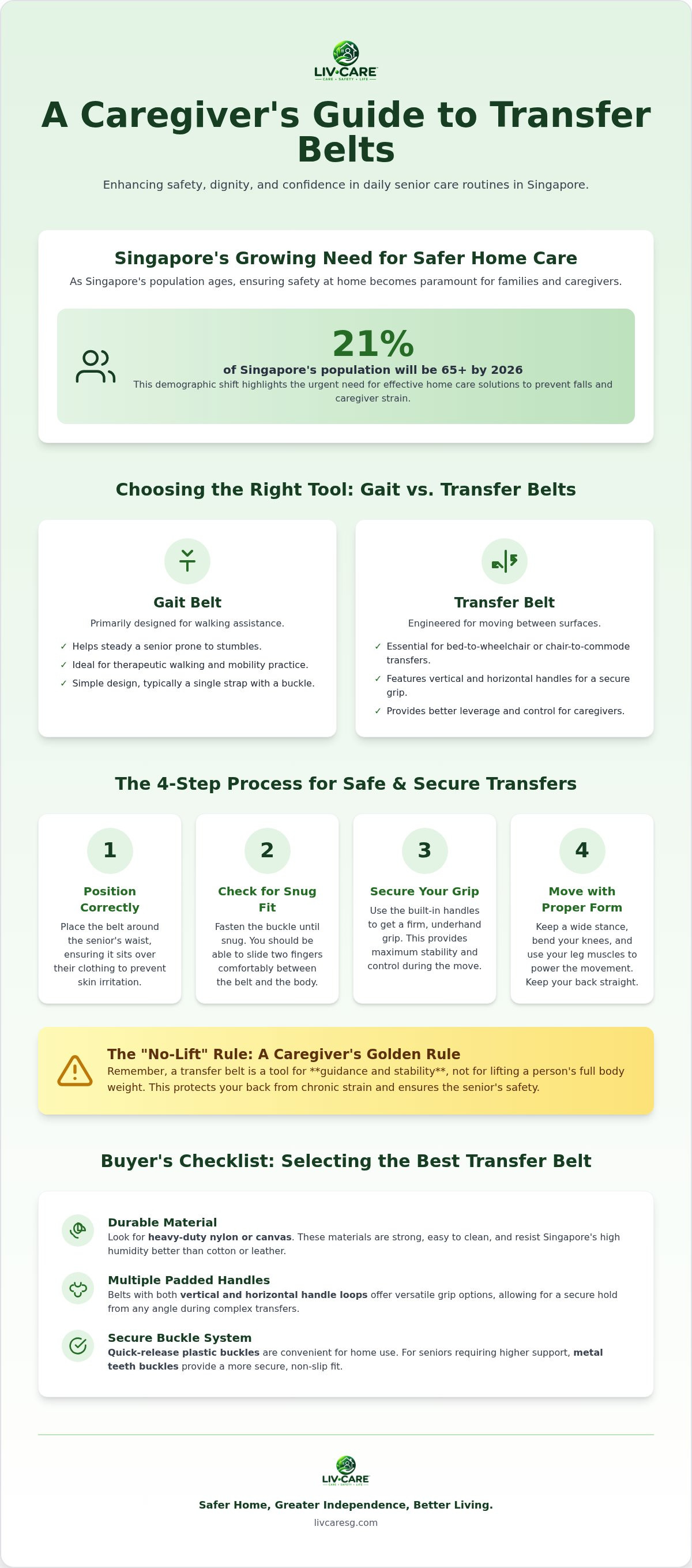
A transfer belt for elderly Singapore residents is a sturdy assistive device, typically crafted from heavy-duty nylon or canvas, that is secured around a senior’s waist. What is a transfer belt? Essentially, it provides a reliable handhold for caregivers, allowing them to guide a person during transitions without pulling on fragile limbs or clothing. In our local context, where Singapore reaches "super-aged" status in 2026 with 21% of the population aged 65 and above, safe handling is vital for families opting for aging-in-place. Proper use of these tools can significantly reduce the risk of caregiver back injuries by providing a stable pivot point during movement.
To better understand this concept, watch this helpful video:
Gait Belts vs. Transfer Belts: Understanding the Differences
While people often use the terms interchangeably, subtle differences matter for your home care routine. A gait belt is primarily designed for walking assistance, helping you steady a senior who is prone to stumbles. If your loved one is working on mobility, you might also explore our Walking Aids for Elderly in Singapore: 2026 Guide. In contrast, a transfer belt often includes vertical and horizontal handles. These extra grips are crucial when moving someone between a bed and a wheelchair, especially in the compact spaces of many Singaporean homes. They allow for better mechanical advantage and ensure the senior doesn't slide during the seated-to-standing phase, which is a common point of failure in home transfers.
How to Choose and Use a Transfer Belt Safely
Applying a transfer belt for elderly Singapore seniors requires a methodical approach to ensure both comfort and security. To start, position the belt around the waist, ensuring it sits over clothing to prevent skin shearing or irritation. Tighten the strap until it's snug, but always check for "two-finger" clearance between the belt and the senior's body. Once secured, use the built-in handles to provide a steadying hand. Learning involves adhering to the "No-Lift" rule. The belt isn't a carrying strap; it's a tool for guidance and stability. Never attempt to lift a senior's full weight using only the belt handles, as this can lead to falls or serious caregiver back strain.
Key Features to Look for Before Buying
When selecting a transfer belt for elderly Singapore homes, consider our local climate. Heavy-duty nylon is the preferred material because it resists the high humidity better than leather or cotton, which can degrade or harbor bacteria over time. Look for designs that offer both vertical and horizontal handle loops. This variety allows you to maintain a secure grip from different angles, whether you're assisting with a standing pivot or a seated slide. For domestic use, quick-release plastic buckles are often more convenient, though metal teeth buckles provide a more permanent, non-slip tension for seniors who require higher levels of support. Integrating these tools is a core part of a broader Singapore elderly home safety strategy. You can browse our curated range of safety equipment in our Products section to find a model that fits your specific needs.
Integrating Transfer Belts into Your Home Care Routine
Incorporating a transfer belt for elderly Singapore residents into your daily routine makes high-traffic transitions much safer. When moving from a bed to a wheelchair, position your feet in a wide, staggered base to maintain balance. Use your leg muscles to power the movement rather than pulling with your back. This mechanical advantage is essential for long-term caregiving health. For a complete look at mobility planning, our guide on Choosing a Wheelchair in Singapore provides additional context on pairing equipment.
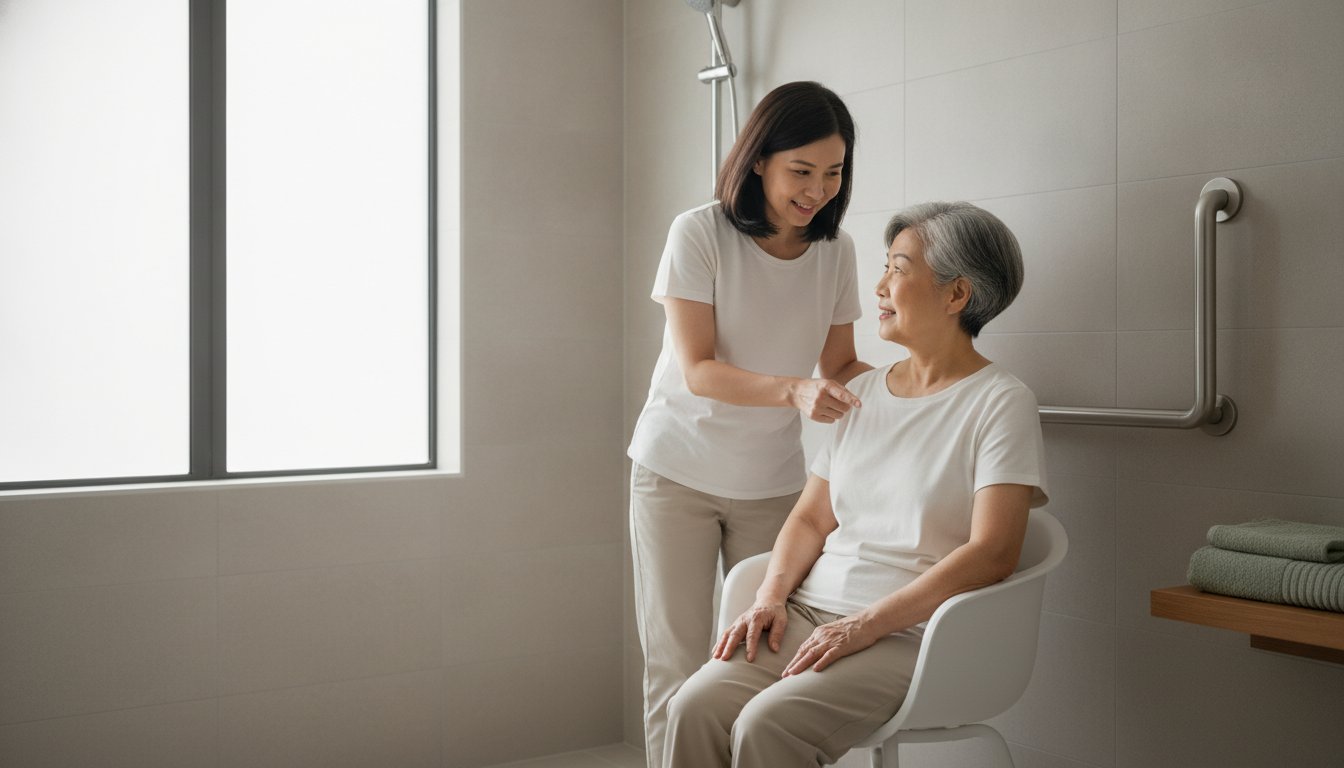
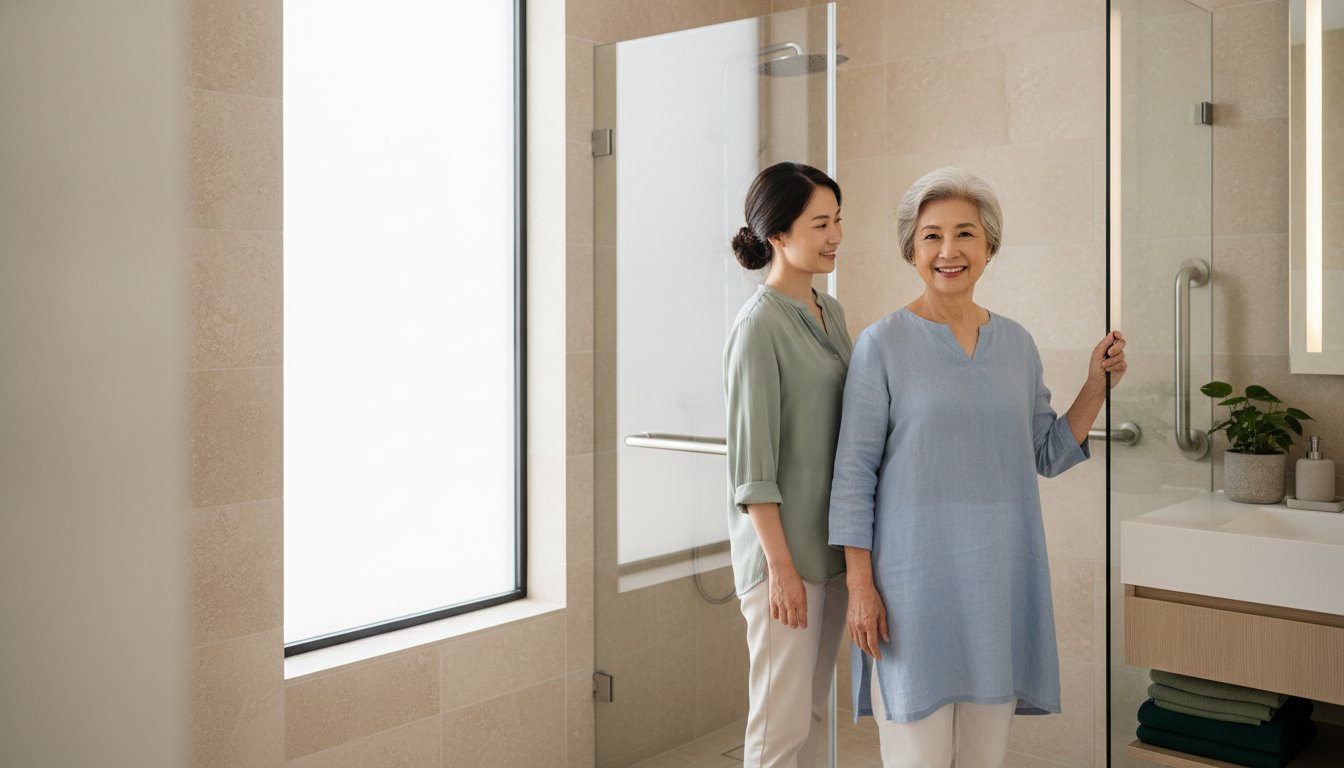
Bathroom transfers present unique challenges due to limited space and potential slip hazards. During wheelchair-to-commode movements, the belt acts as a steadying anchor, allowing you to guide the senior's hips accurately. We recommend visiting a medical equipment showroom to try various belt styles. Seeing how handles are oriented helps you choose a model that works best for your specific home layout and your own grip strength.
Professional Support and Home Safety Assessments
A professional home care assessment can be a game-changer for local families. These evaluations identify specific high-risk zones in your flat, such as narrow corridors or uneven flooring where a transfer belt for elderly Singapore seniors is most needed. Liv.Care’s Care Membership supports this by providing expert coordination and ongoing advice for complex mobility cases. It’s also vital to ensure domestic helpers are coached in safe handling techniques. Proper training ensures every member of the household can perform transfers with skill, safety, and dignity.
Empowering Safer Home Care Transitions
Mastering the use of a transfer belt for elderly Singapore homes is a significant step toward safer, more sustainable caregiving. You've learned that choosing the right material and following the "No-Lift" rule are essential for preventing chronic back pain. Integrating these tools into your daily routine protects your health while preserving the dignity of your loved one. Whether you're managing bed transfers or bathroom safety, the right equipment makes all the difference. We invite you to browse our curated range of mobility and transfer aids at Liv.Care Singapore. Our showroom is available for hands-on demonstrations, and our Care Membership offers personalized support for your family's unique journey. You don't have to navigate these challenges alone. With the right tools and expert guidance, you can provide professional-level care with total confidence and ease.
Frequently Asked Questions
Is a transfer belt the same as a gait belt?
Yes, while terms are often used interchangeably, a gait belt is primarily for walking support, while a transfer belt often features extra handles for sitting and standing. Both provide a secure handhold to prevent slips. Choosing a transfer belt for elderly Singapore homes often means looking for those extra grips to manage tight spaces and varied furniture heights during daily care.
How tight should a transfer belt be on an elderly person?
The belt should be snug enough to prevent slipping but loose enough to remain comfortable. A reliable rule is to check for "two-finger" clearance between the strap and the person's waist. Ensure the belt is placed over clothing to protect fragile skin. If the belt slides up during a move, it's too loose and could cause a fall or bruising.
Can I use a transfer belt to lift a senior who has fallen on the floor?
You shouldn't use a belt to lift a senior directly off the floor. These tools are meant for guidance and stability during pivots, not for dead-lifting weight. Lifting someone from the ground requires specific mechanical aids or multiple people to avoid caregiver back injury. Use the belt only to steady the senior once they've safely transitioned back to a seated position.
Where can I buy a high-quality transfer belt for elderly in Singapore?
You can purchase a reliable transfer belt for elderly Singapore seniors through the Liv.Care Singapore online shop or at our physical showroom. We provide expertly selected safety equipment tailored for local households. Beyond the product, our Care Membership offers personalized support and home care assessments to help you identify high-risk zones and select the most appropriate mobility aids for your environment.
Comments