
Walking Aids for Elderly in Singapore: 2026 Guide

Choosing a walking aid isn't just about buying a stick; it's about securing your parent's freedom within the walls of their own home. You likely worry every time your loved one moves around the house alone, wondering if a slip or a fall is just one step away. It's natural to feel overwhelmed by the technical differences between rollators and frames, especially when you're also trying to fit equipment into a compact layout. We understand that you want more than just a product; you want the peace of mind that comes with a safer home environment.
This 2026 guide helps you identify the right walking aids for elderly Singapore residents to ensure safety and independence. You'll learn how to select equipment that matches your parent's specific mobility level while considering the latest LTA regulations and SMF subsidies. We'll also explain how professional home assessments help you make a confident, informed decision for your family's future.
Table of Contents
Understanding Mobility Needs: When to Consider Walking Aids
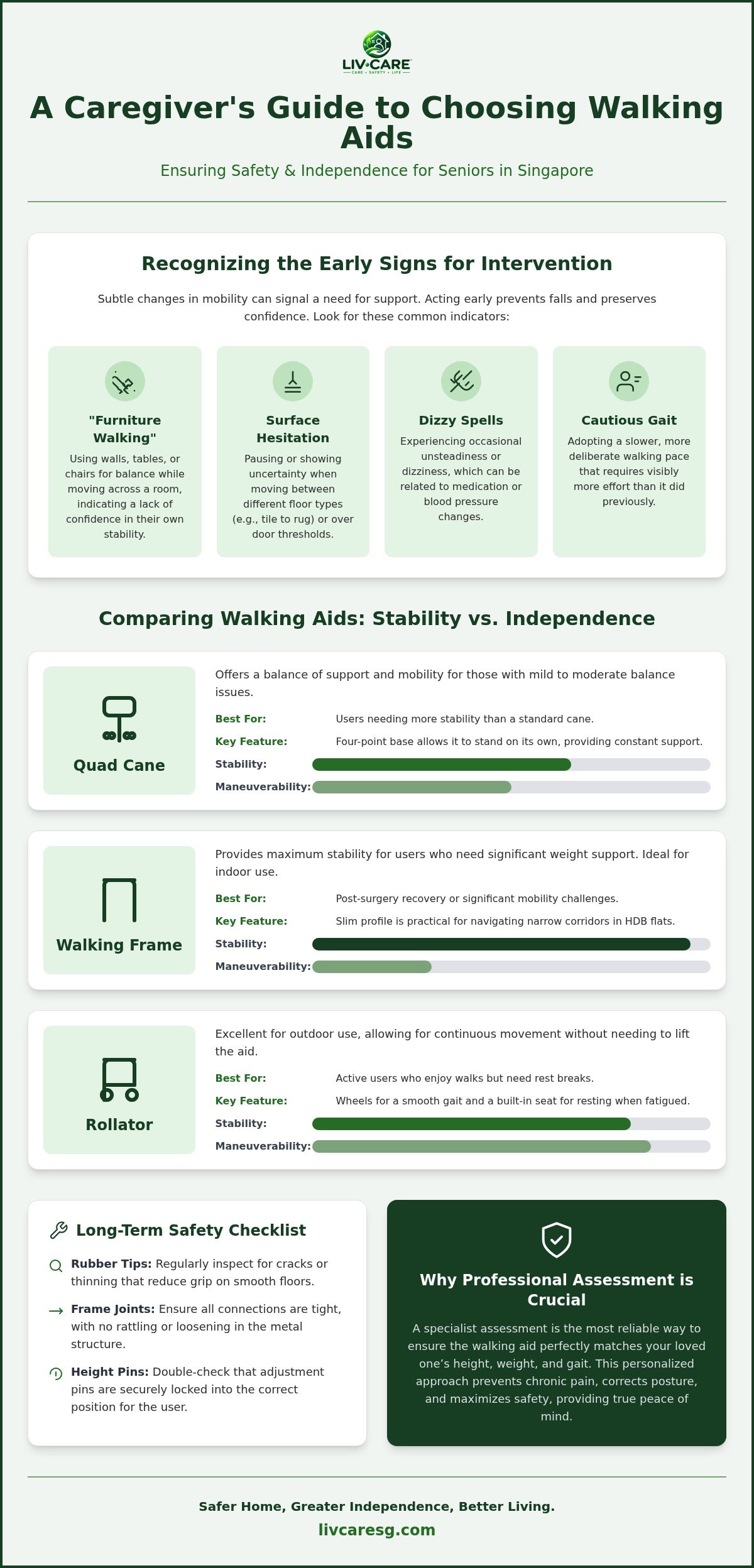
Walking aids are clinical tools specifically engineered to enhance stability, offload weight from painful joints, and significantly lower the risk of falls. Many families view these devices with hesitation, fearing they represent a loss of autonomy. In reality, choosing appropriate walking aids for elderly Singapore residents serves as a vital bridge to independence. It allows seniors to continue their daily routines without the constant fear of a stumble. We view this selection through a Stability-to-Independence spectrum. This framework helps us match the level of physical support to the user's desire for activity. For a deeper look at these tools, you can consult this comprehensive guide to mobility aids.
Recognizing the Early Signs of Mobility Decline
It's often the subtle changes that signal a need for assistance. You might notice your parent "furniture walking," which involves touching walls, tables, or chair backs for balance while moving across a room. This habit suggests they no longer feel secure in their own center of gravity. Other common indicators include:
Hesitation when transitioning between different floor surfaces, like moving from carpet to tiles or over door thresholds.
Occasional dizzy spells or unsteadiness often linked to blood pressure changes or medication side effects.
A slower, more cautious gait that requires significantly more effort than it did just a few months ago.
Early intervention is essential for long-term health. Introducing a quad cane or a walking frame at the first sign of instability can prevent life-altering injuries such as hip fractures. Proactive care ensures that walking aids for elderly Singapore seniors remain a tool for empowerment rather than a delayed reaction to a crisis. By addressing these signs early, you help your loved ones maintain their confidence and safety at home.
Comparing Walking Aids: From Canes to Rollators
Selecting the right equipment depends on where your loved one sits on the stability-to-independence spectrum. Standard canes are lightweight and portable, making them ideal for those with mild balance issues. In contrast, quad canes feature a four-point base that stays upright independently, offering a much higher degree of support. For those seeking clinical depth on these differences, the official NHS guidance on walking aids provides a trusted framework for these comparisons.
When looking at walking aids for elderly Singapore residents, your home environment is a key factor. Most local homes use smooth ceramic tiles or vinyl, which can become slippery if the aid lacks proper traction. Always look for equipment with reinforced, anti-slip rubber tips. Height adjustability is equally critical. An improperly sized aid can cause chronic back pain or even increase fall risks by forcing the user into an unnatural posture.
Balancing Stability and Maneuverability for Daily Use
Rollators excel during outdoor walks. Their wheels facilitate a continuous walking motion, and the built-in seat attachments offer a safe place to rest when fatigue sets in. However, the wider footprint of a rollator can be challenging in tight spaces. For navigating the narrow corridors of a typical HDB flat, a static walking frame is often more practical. Its slim profile allows for easier movement between the bedroom and bathroom without bumping into furniture.
If mobility needs exceed what these aids can provide, our guide on choosing a wheelchair offers a path forward. We recommend you view our product range to compare these features in a real-world setting.
Ensuring Long-Term Safety and Professional Care Support
Safety doesn't end with your initial purchase. As a caregiver, you play a vital role in the longevity and effectiveness of the equipment. You should regularly inspect these key areas to maintain the integrity of walking aids for elderly Singapore users:
Rubber tips: Check for thinning or cracks that reduce grip on smooth tiled floors.
Frame joints: Ensure there's no loosening or rattling in the metal structure.
Height pins: Confirm they're securely locked into the correct position for the user.
Routine checks ensure that mobility tools remain reliable for daily use. For more expert advice on fall prevention, it's helpful to remember that equipment maintenance is just as vital as the device's initial quality. We believe a professional assessment is the essential first step before finalizing any choice. A specialist ensures the equipment matches your loved one’s specific height, weight, and gait. This prevents chronic pain or postural issues. This personalized approach fits into the wider strategy for Singapore elderly home safety, where hardware and a modified environment work together.
The Value of Professional Home Care Assessments and Memberships
A Home Care Assessment identifies hidden environmental hazards that walking aids for elderly Singapore alone cannot resolve. Our specialists look for poor lighting or cluttered pathways that might impede a rollator. To support your family's long-term needs, the Liv.Care Membership offers ongoing care coordination and exclusive discounts on future upgrades. This includes essential bathroom modifications like toilet safety frames. We're here to be your knowledgeable partner throughout this journey. We encourage you to visit the Liv.Care Blogs for more educational resources on senior wellness and local caregiving tips.
Empowering Your Loved One's Mobility
Selecting the right equipment is a significant step toward a safer, more active lifestyle for your parent. We've explored how matching a device to their stability needs prevents falls while fostering confidence. Remember that regular maintenance and professional assessments ensure these tools provide reliable support as needs evolve. Our team is here to guide you through every stage of this journey with expertise and care.
You can browse our curated selection of walking aids and mobility solutions to find options vetted by experts. We provide Singapore-wide delivery and support; you can also visit our showroom for hands-on testing to ensure a perfect fit. Investing in the right walking aids for elderly Singapore residents creates a foundation for long-term independence. We look forward to helping you build a safer home for your family.
Frequently Asked Questions
How do I know if my parent needs a walking stick or a walking frame?
A walking stick is suitable for those who need mild balance support or have weakness on one side of the body. If your parent exhibits significant unsteadiness or tires easily, a walking frame provides a wider base of support. Observe their gait at home; if they lean heavily on furniture while moving, a frame is usually the safer choice.
Are walking aids for the elderly subsidized in Singapore?
Yes, eligible seniors can access the Seniors' Mobility and Enabling Fund (SMF) for subsidies up to 90% of the cost. To qualify, the applicant must be a Singapore Citizen or Permanent Resident aged 60 or older with a household monthly income per person of $2,000 or less. You must obtain a clinical assessment before purchasing to ensure the subsidy applies.
How do I measure the correct height for a walking cane or walker?
To find the correct height, have your parent stand upright with their shoes on and arms hanging naturally at their sides. The top of the aid should align with the crease of their wrist. This positioning ensures a 15 to 30 degree bend in the elbow during use. Proper sizing is essential to ensure walking aids for elderly Singapore residents function safely.
Can I take a rollator or walking frame on the MRT and buses in Singapore?
You can take manual walking aids on all public transport in Singapore. Most MRT stations and buses are designed with barrier-free access to accommodate seniors using rollators or frames. If you use motorised walking aids for elderly Singapore, remember that LTA regulations as of June 2026 require a speed limit of 6 km/h on public paths. Always park the device safely during the commute.


Comments